
Last updated September 20, 2026
Full 25-point door and opener safety check with every visit - springs, cables, rollers, tracks, and your LiftMaster or Chamberlain opener included
You get a price before we start. It does not change when the truck arrives.
 Before
 After
After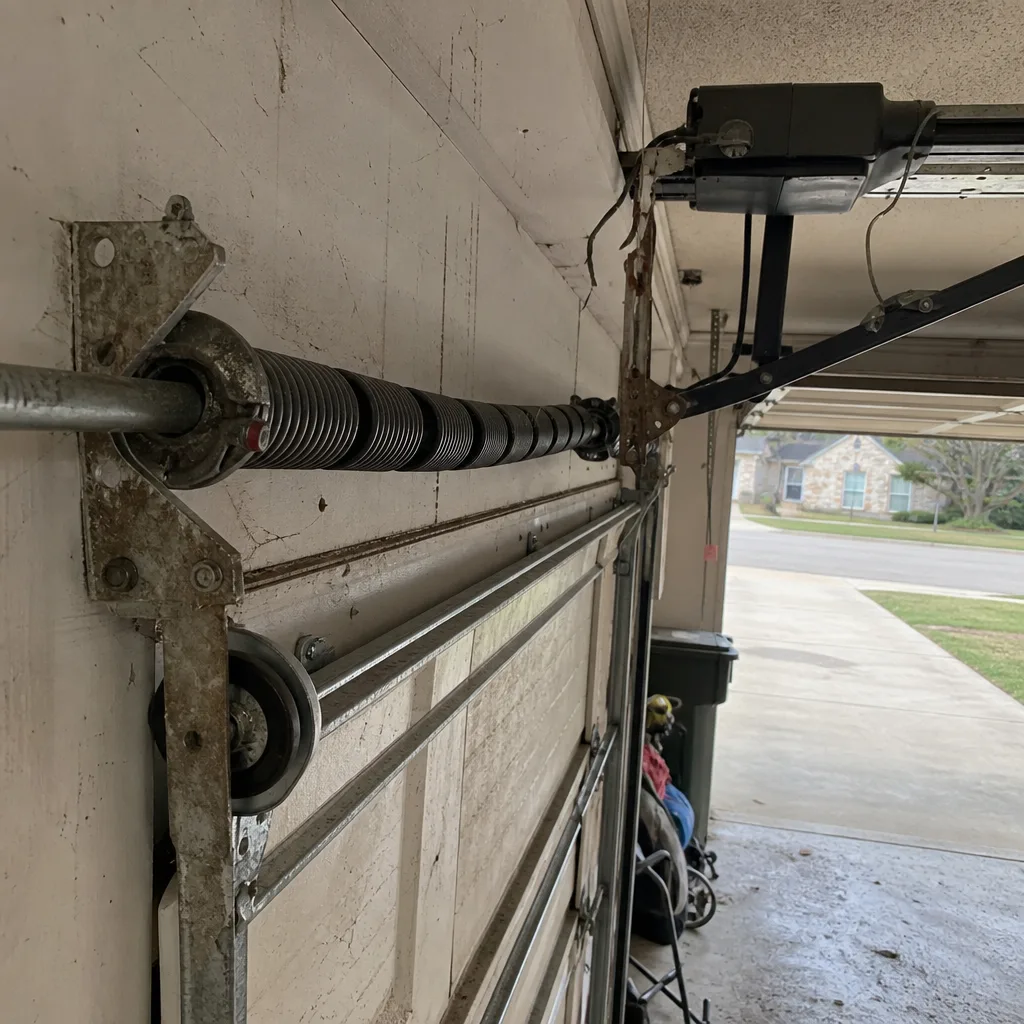 Before
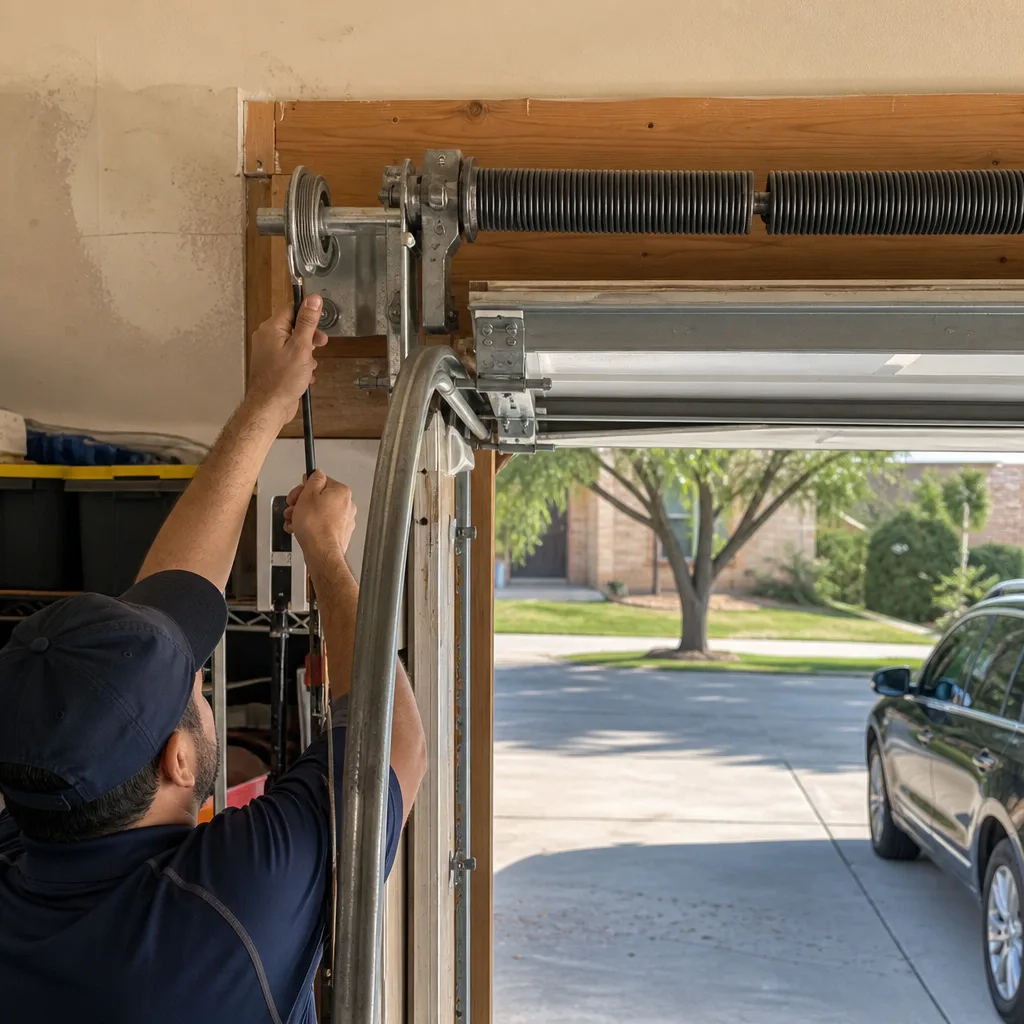 After
After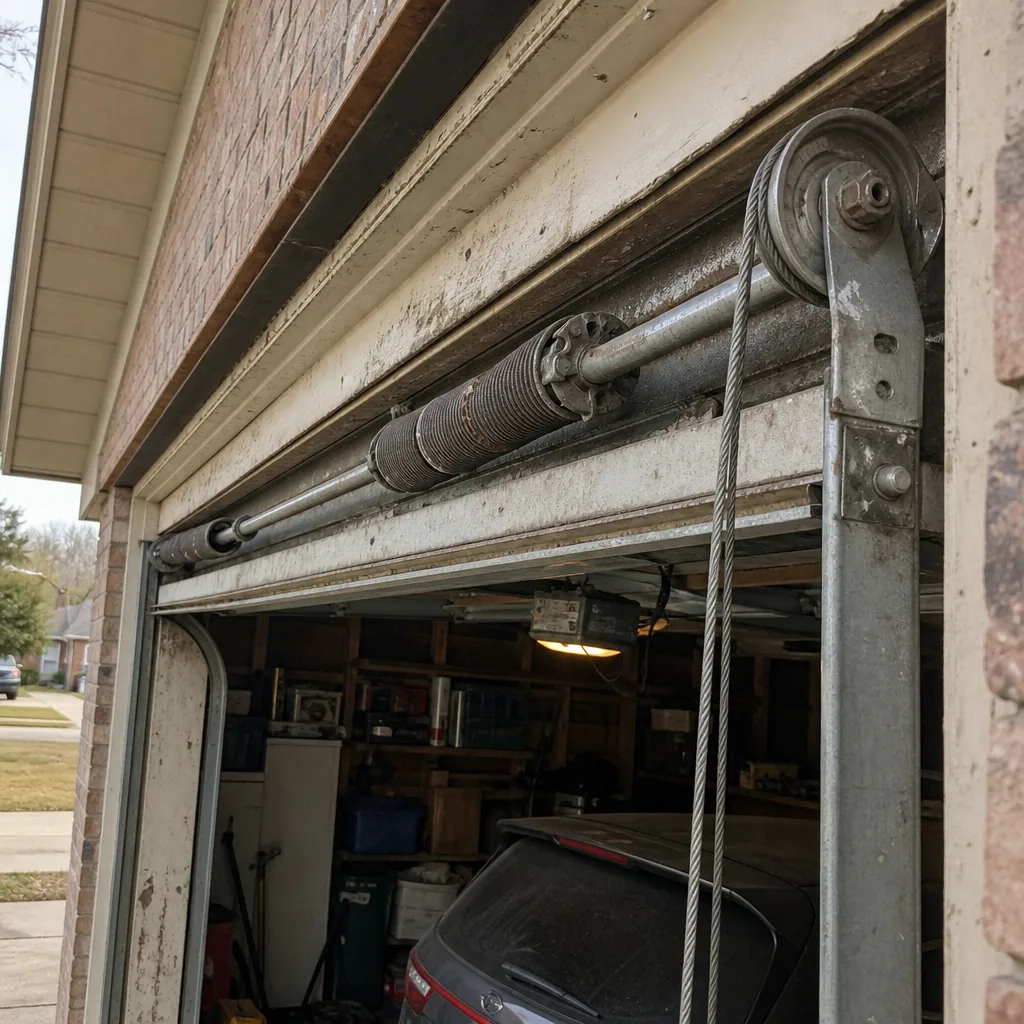 Before
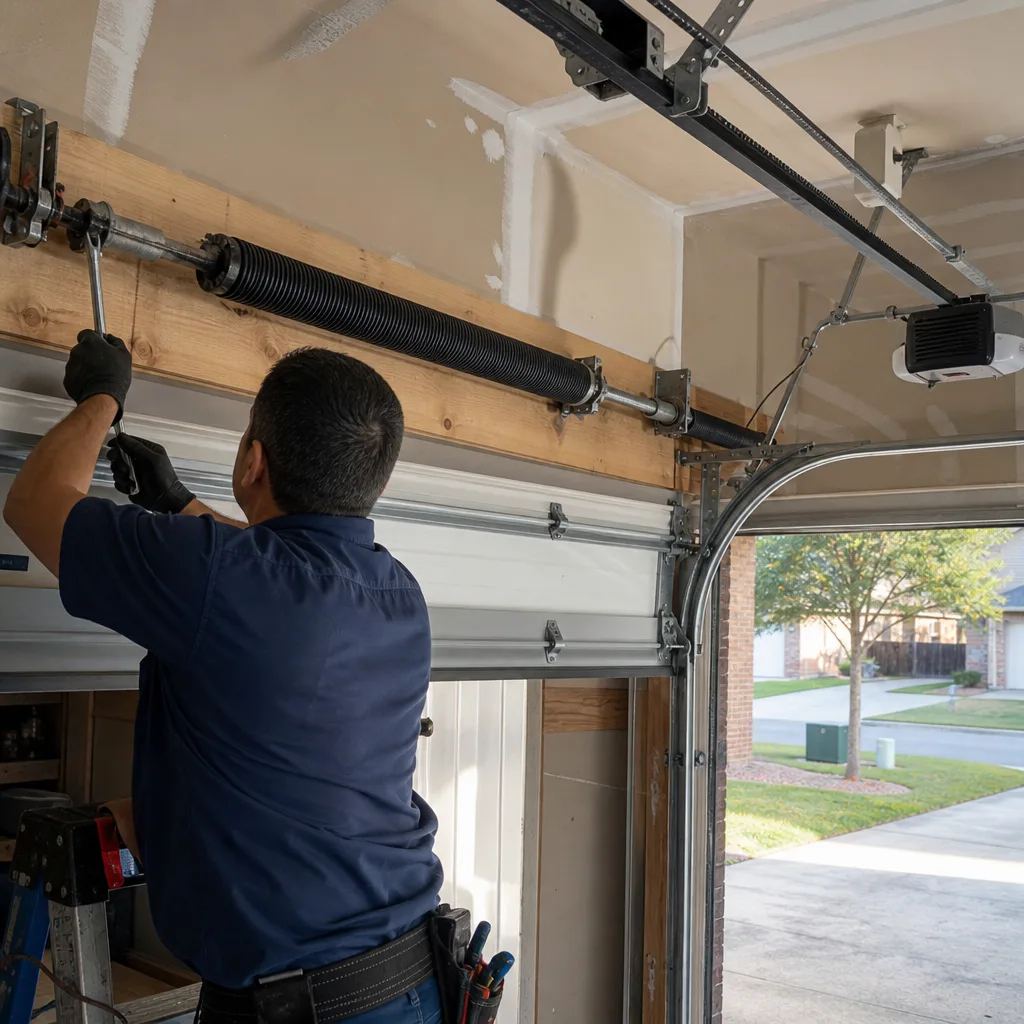 After
AfterGarage Door Cost Breakdown: The Dallas Homeowner’s Reference for 2026
In Dallas, two neighbors with identical 16×7 steel garage doors can pay $900 and $2,800 for the same spring replacement. The door didn’t change. The neighborhood didn’t change. What changed was how the quote was written. Most Dallas garage door companies issue a single line item – “$1,400 for spring replacement and tune-up” – and that format is precisely what makes price comparison impossible. This guide breaks down every component cost, every labor norm, and every place margin hides in a Dallas garage door quote so you can read any estimate and see exactly what you’re paying for. We’re going to name dollar ranges for the 2026 Dallas market, explain why they vary, and show you what a written-price quote should actually look like.
Quick Answer
Garage door repair in Dallas typically costs $150 to $600 for most component-level fixes in 2026, with torsion spring replacement running $180 to $340 per spring including labor, opener replacement at $350 to $750 installed, and full door replacement between $1,200 and $4,500 depending on material and insulation. The single largest pricing variable isn’t parts quality – it’s quote structure. A written-price-first quote itemizes each component; a verbal or single-line quote bundles parts, labor, and margin into one number you can’t audit. In Dallas specifically, service call fees of $49 to $89 are standard and should be credited toward repair work, not charged on top of it.
Table of Contents
- Component-Level Price Ranges for Dallas in 2026
- Dallas Labor Rates and What a Service Call Fee Should Cover
- Repair vs. Replacement: The Parts-to-Door Ratio
- Where Markup Concentrates in a Bundled Quote
- Written Price vs. Verbal Estimate: The Financial Difference
- Dallas-Specific Factors: Climate, Code, and Market Pressure
- Common Mistakes to Avoid
- When to Call a Professional
- Frequently Asked Questions
- The Bottom Line
BeforeAfterComponent-Level Price Ranges for Dallas in 2026
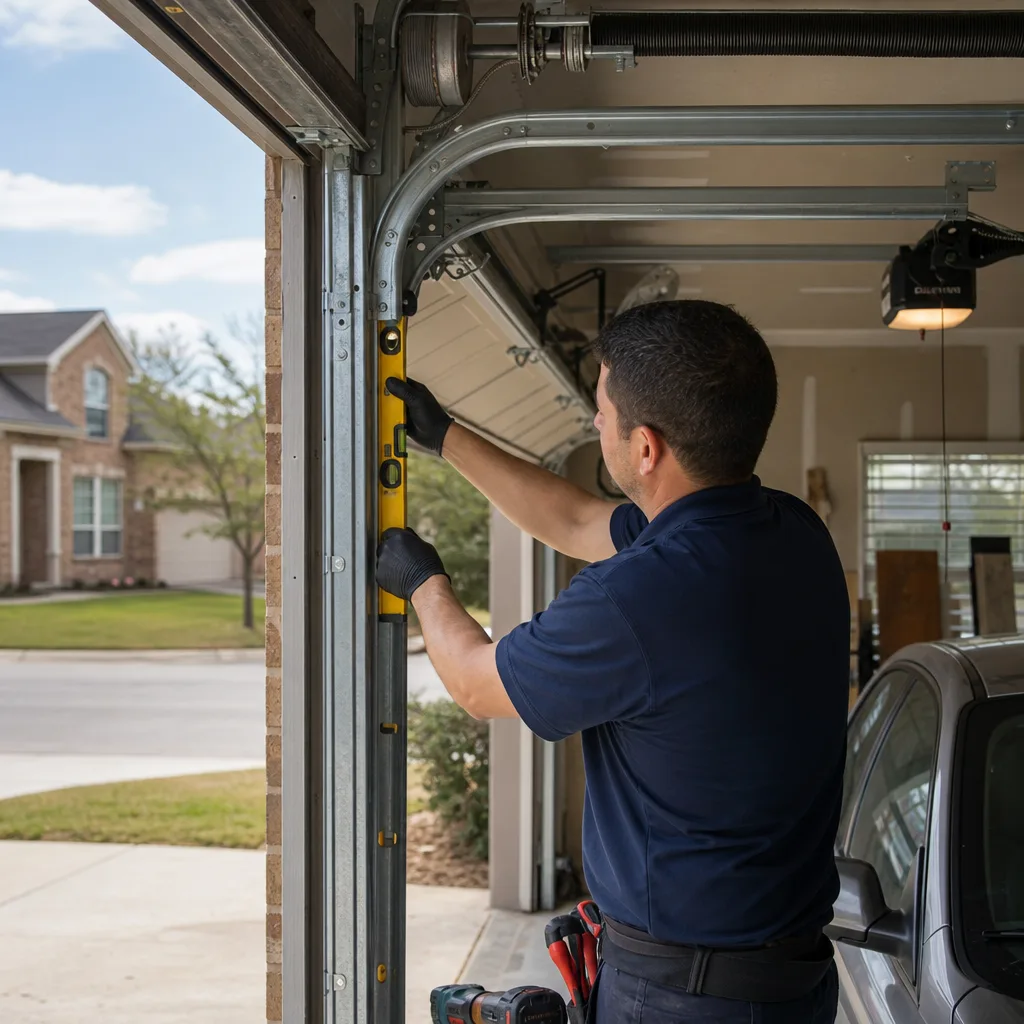
Every garage door is a system of maybe two dozen parts, and each one has a Dallas-market price range that’s fairly predictable. When you see a quote that doesn’t itemize these, you’re looking at a bundle – and bundles are where margin hides. Here are the component prices we see across Dallas, from Oak Cliff to Preston Hollow, for 2026:
- Torsion springs (pair): $180 to $340 installed. This is the most common repair in Dallas. The variance depends on wire gauge (0.225-inch vs. 0.25-inch vs. 0.262-inch), cycle rating (10,000-cycle standard vs. 25,000-cycle high-cycle), and whether the quote includes both springs. Any Dallas spring quote should include both springs – replacing one spring on a paired system means the older spring fails sooner, and you pay a second service call.
- Extension springs (pair): $140 to $220 installed. Found on older Dallas homes and lighter doors. These are cheaper than torsion systems but don’t belong on doors over 150 pounds.
- Cables (pair): $120 to $200 installed. Cables on Dallas doors fail most often in summer, when heat expansion and contraction cycles stress the steel. A cable replacement should include checking the drum condition, because a grooved drum will shred a new cable within months.
- Rollers (set of 10-12): $100 to $180 installed for nylon, $80 to $140 for steel. Dallas humidity makes nylon the smarter choice – steel rollers rust and then grind the track. Nylon rollers with sealed bearings run quieter and last 10 to 15 years in this climate.
- Bottom seal (weather seal): $70 to $120 installed. This is the part that fails first in Dallas heat. The rubber compound degrades under UV exposure and repeated 100-degree days, and a failed seal lets in dust, pests, and conditioned air loss. Replacing it annually on south-facing doors is common in Dallas.
- Panels (single section): $250 to $500 per panel including installation. On a 4-section door, one damaged panel might be worth replacing; two or more damaged panels usually means a full door replacement is the better financial move. Dallas hail storms in spring are the primary culprit here – and a dented panel is usually a covered insurance claim.
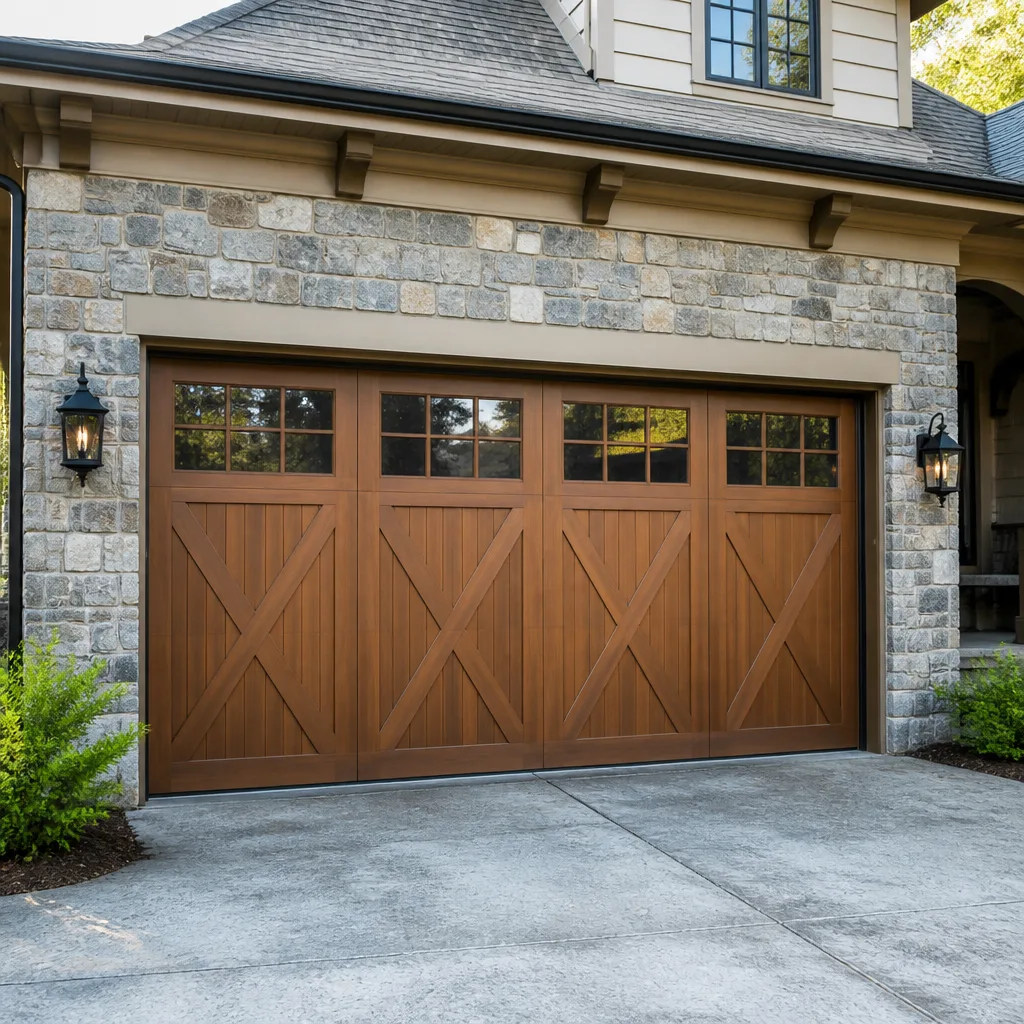
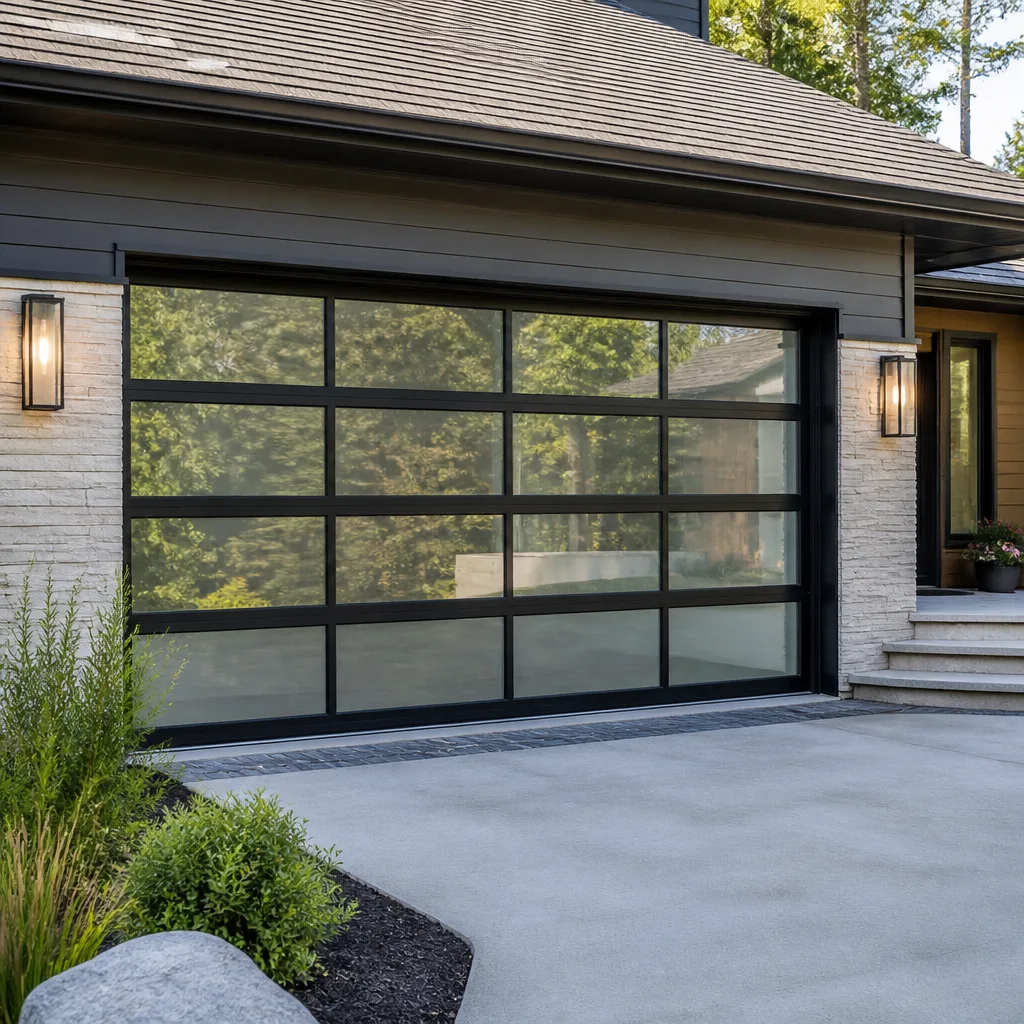
- Full door (16×7, standard steel): $1,200 to $2,800 installed. This includes basic R-value insulation. Premium materials push higher: wood composite doors run $2,500 to $4,500, and full aluminum with glass runs $3,000 to $6,000. Clopay and Amarr dominate the Dallas mid-market, and a 2026 Dallas quote for a decorated steel door with R-12 insulation should land around $1,800 to $2,400.
- Opener replacement (chain drive): $350 to $500 installed. Belt drive runs $450 to $650. Chamberlains and Genie units are both common in Dallas, and the labor is the same regardless of brand. A 3/4-horsepower motor is adequate for a standard double door; you don’t need 1.25 HP unless you’re running a solid wood door.
- Opener motor only (no rail or chain): $200 to $300 installed. This applies when the motor burns out but the rail and carriage are in good shape. In Dallas, motor failures spike after summer thunderstorms – power surges are the leading cause.
Dallas Labor Rates and What a Service Call Fee Should Cover
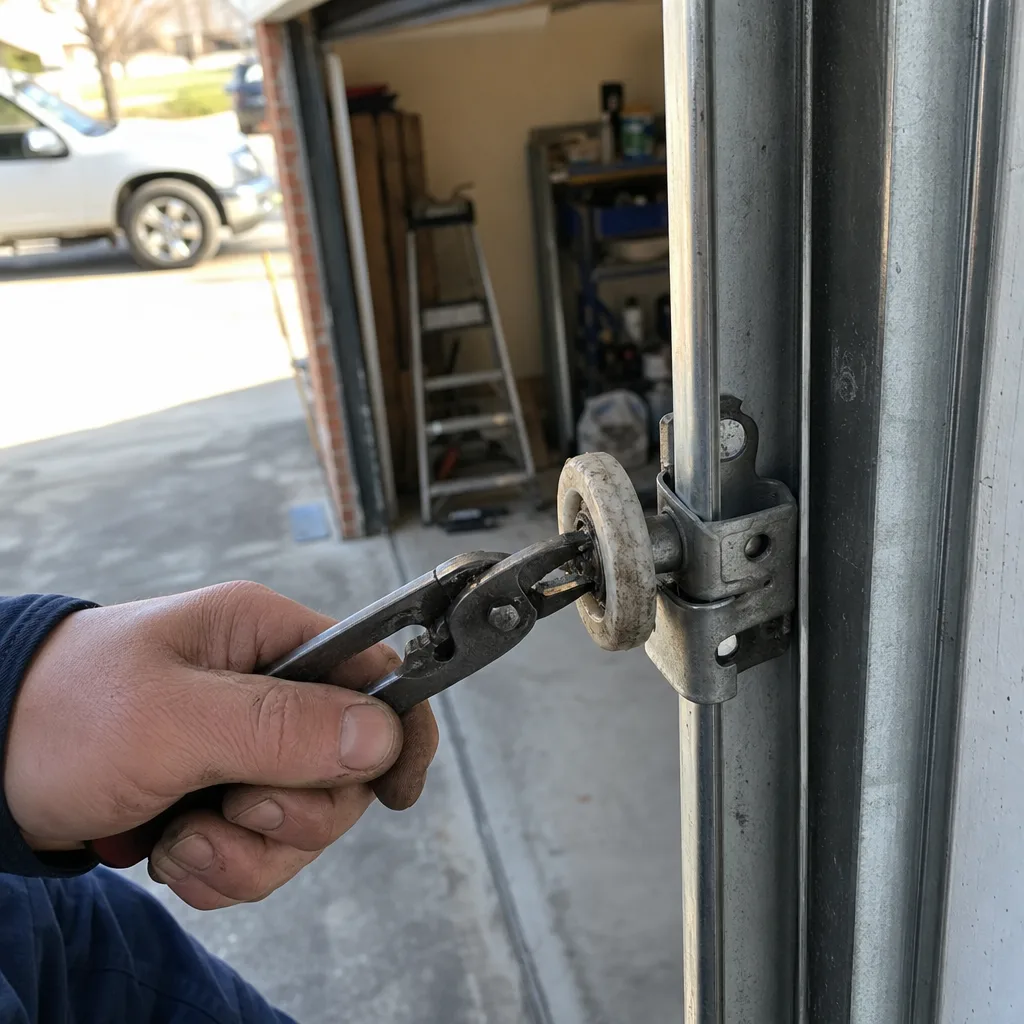
Dallas garage door labor runs $75 to $120 per hour as of 2026, and most component-level repairs are quoted as flat rates built on that hourly assumption. A spring replacement is typically a 45-to-90-minute job; an opener replacement runs 2 to 3 hours. When you see a flat rate on a component, you’re seeing parts cost plus labor plus margin – and the only way to audit that is to ask for the components to be listed separately.
A service call fee in Dallas should be $49 to $89. That’s the diagnostic fee, the “we came out and looked at it” fee. Here’s the distinction that matters: a legitimate Dallas garage door company credits the service call fee toward the repair if you approve the work. A company that charges the service call fee on top of the repair is double-dipping. Ask before the technician arrives: “Is the service call fee credited toward the repair?” If the answer is no, call someone else. Our Garage Door Repair in Dallas page explains our fee structure in detail, but the short version is this: the diagnostic fee is credited toward the repair, always.
What should the service call fee actually cover? A full inspection: spring tension check, cable condition, roller wear, track alignment, balance test, opener force settings, and safety sensor operation. If the technician spends less than 15 minutes and then hands you a quote, they didn’t earn the fee. In Dallas specifically, you’ll see service fee variance by zone – some companies charge more in Highland Park and University Park than in Mesquite or Garland. There’s no mechanical reason for that. It’s zip-code pricing, and it’s legal, but you should know it’s happening.
Repair vs. Replacement: The Parts-to-Door Ratio
Here’s a method that removes opinion from the repair-versus-replace decision. Take the total cost of the parts that need replacing, and divide by the cost of a new equivalent door. If the ratio is under 0.4, repair is usually the right call. If it’s over 0.6, replacement usually makes more financial sense. Between 0.4 and 0.6, consider the door’s age and condition of the remaining components.
- Add up the parts. Write down every failed component: spring at $280, two cables at $160, and the bottom seal at $90. Total: $530.
- Price the equivalent new door. A 16×7 steel door with matching insulation runs about $1,800 installed in Dallas in 2026.
- Calculate the ratio. $530 divided by $1,800 is 0.29. That points clearly to repair.
- Check the door’s age. If the door is under 10 years old and the ratio is under 0.5, repair. If the door is over 15 years old and the ratio is over 0.5, you’re pouring money into a door you’ll likely replace within a few years anyway. This is what we walk through with every Dallas homeowner – it’s a calculation, not a sales pitch.
One wrinkle specifically relevant to Dallas: hail claims. If your door has panel damage from a spring storm, your homeowner’s insurance likely covers it. Get the insurance estimate first. If the insurance payout is approaching the cost of a new door, use it. Do not repair a hail-damaged door out of pocket without checking your deductible. We’ve seen Dallas homeowners in Lakewood and Casa Linda pay $800 for panel repairs when their deductible was $500 and their policy would have replaced the entire door.
Where Markup Concentrates in a Bundled Quote
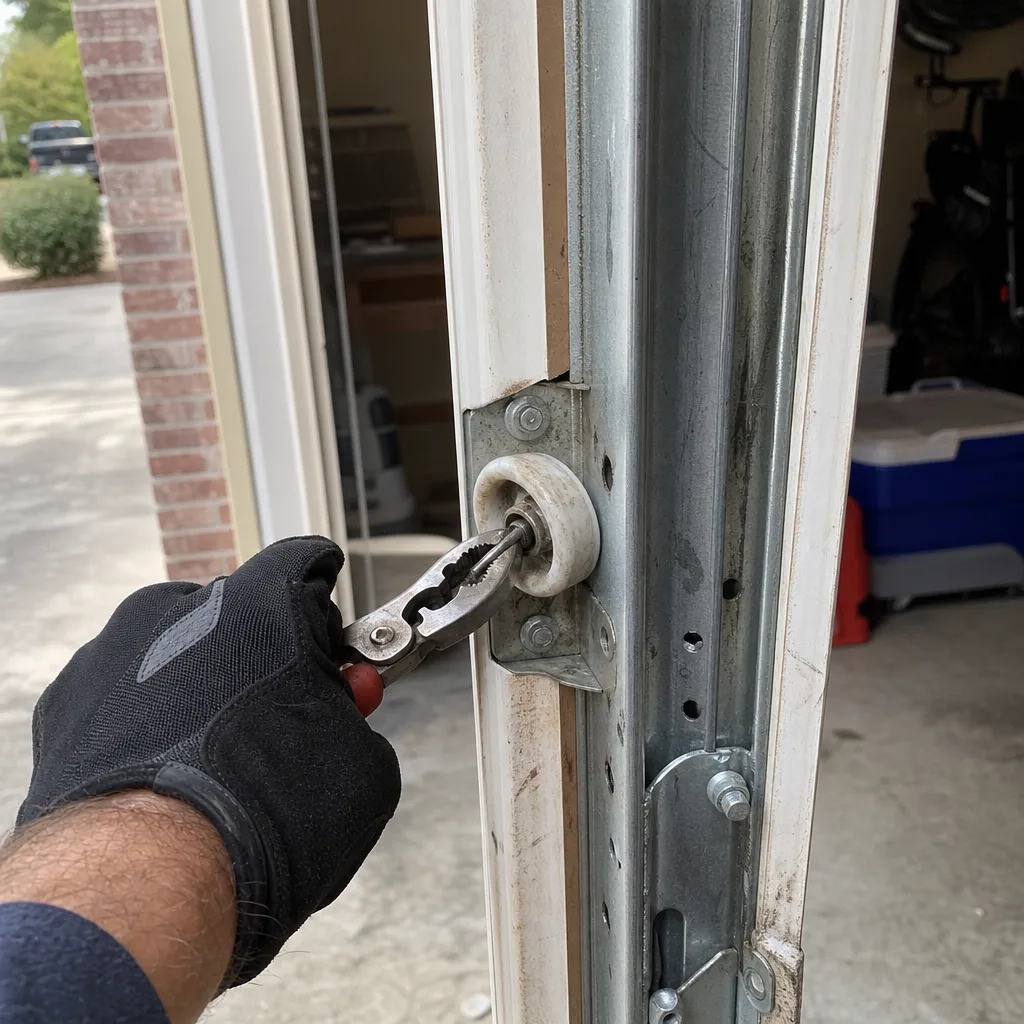
This section names the specific line items where Dallas garage door companies bury margin. These are the items to inspect when you read any quote from any company in Dallas.
- The “tune-up” line item ($80 to $150): A tune-up is lubrication, bolt tightening, and minor adjustments. It takes 30 minutes with a $15 can of lithium grease. It should cost $40 to $60 as a standalone service. When it appears as a $150 add-on inside a spring replacement quote, that’s margin dressed up as maintenance. Ask what exactly the tune-up includes, in writing, and whether it’s already part of the spring replacement labor. Usually, it is.
- The “disposal fee” ($50 to $120): Disposing of an old door or opener in Dallas means hauling it to a metal recycling facility, which often accepts it for free or pays scrap value. A reasonable haul-away fee is $35 to $50 for the fuel and time. Anything above $75 is margin. If the quote lists a disposal fee line item, ask whether the material is being recycled. If the company can’t answer, they may be charging you for a service that costs them nothing.
- The “upgrade” recommendation you didn’t ask for: A technician quotes a standard spring replacement, then recommends a high-cycle spring at double the price “because it lasts longer.” The high-cycle spring is genuinely better – 25,000 cycles versus 10,000 – but the question is whether the $150 premium is warranted. For most Dallas homes, the door opens and closes about 4 to 6 times per day. That’s roughly 2,000 cycles per year. A 10,000-cycle spring should last 5 years; a 25,000-cycle spring should last 12. If you’re planning to stay in the home long-term, the high-cycle spring is a defensible buy. If the technician didn’t explain the cycle math, they’re just upselling.
- Bundled “packages” with a single price: Spring replacement, cables, rollers, and a tune-up for a single number around $800 to $1,200. That’s the single-line quote format from the opening of this guide. The problem: you can’t see what the springs cost, what the cables cost, or what the rollers cost. You can’t compare it to a competitor’s itemized quote. Always ask for the line-item breakdown. A company that won’t provide one is hiding margin by design.
Written Price vs. Verbal Estimate: The Financial Difference
The format of the quote changes what you pay. A verbal estimate is a conversation. A single-line quote is a number. A written, itemized scope is a contract. Here’s why the difference matters in real dollars:
- A verbal estimate can’t be compared. The technician says “$450 for this.” You can’t take that to a competitor for a second opinion because there’s nothing to show. The number exists only in the air.
- A single-line quote can’t be audited. “$650 for spring replacement” tells you two things: the job and the price. It doesn’t tell you the spring wire gauge, the cycle rating, whether both springs are included, or whether the service call fee is baked in or additional. You’re comparing numbers without knowing what the numbers contain.
- A written, itemized scope can be priced against every competitor. When a Dallas homeowner sends us a written estimate from another company, we can read the exact components and give a direct comparison. That’s why we offer a free second opinion on any written estimate – bring the paperwork and we’ll go through it line by line. That’s the point of the format: it makes the quote checkable.
This is the principle behind Clause 1 of The Haven Standard: a flat, written price and written scope before any work starts. Not a “call for a quote,” not a handshake number. A document. In practice, that paper trail is what protects a Dallas homeowner from the $1,400 single-line spring quote described at the top of this guide. Without the written scope, the number is just a number. With it, the number is accountable.
In our experience, most Dallas homeowners who call us have already gotten one of these single-line quotes and couldn’t tell whether it was fair. That’s a rational reaction to a quote format designed to prevent comparison. The fix isn’t to trust a company more; it’s to require the document.
Dallas-Specific Factors: Climate, Code, and Market Pressure
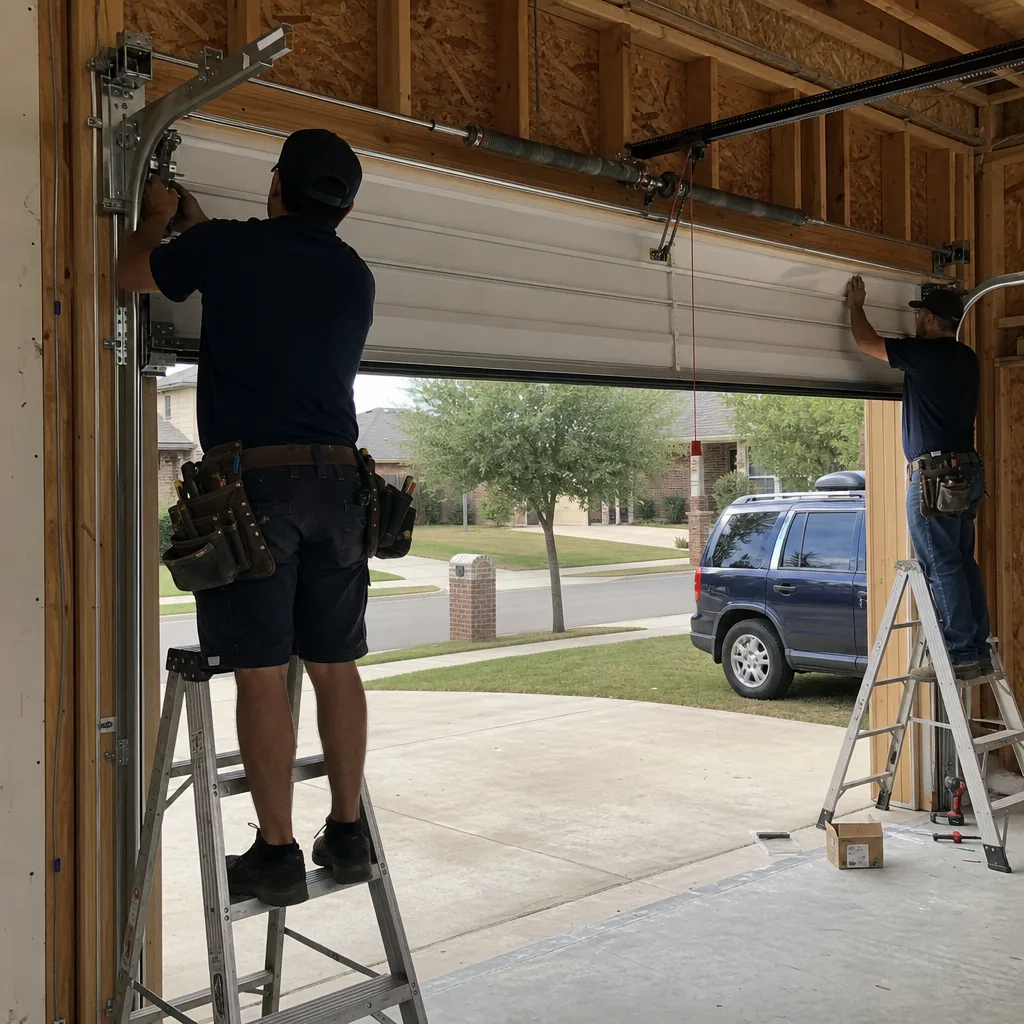
Dallas affects garage door pricing in ways that a national price guide won’t capture. The three biggest: heat, hail, and code enforcement.
Heat. Dallas summers routinely hit 100 degrees for 30 to 60 consecutive days. That heat degrades rubber seals, weakens spring temper over time, and expands metal components. A torsion spring that lasts 7 years in a milder climate may last 5 in Dallas. A bottom seal on a west-facing door in Dallas may need replacement every 18 months, not every 3 to 5 years. When you’re budgeting for long-term garage door maintenance in Dallas, use our Garage Door Repair Maintenance Checklist for Dallas Homeowners and assume accelerated wear on anything rubber or tensioned.
Hail. Dallas sits in the northern edge of Texas hail country. Spring storms regularly produce hail large enough to dent steel panels. A single severe storm in April or May can leave a Dallas neighborhood with hundreds of damaged doors. This matters for cost in two ways: first, panel damage is often an insurance claim and should be handled through your policy before you pay out of pocket. Second, the weeks after a major hail event see a surge in demand – and some companies raise prices. Booking a non-emergency replacement in the fall or winter, when demand is lower, can save 10 to 15 percent on a full door replacement in the Dallas market.
Code and installation standards. The City of Dallas requires permits for new garage door installations, not for component-level repairs like springs or cables. If a company tells you a spring replacement requires a permit, that’s incorrect. If a company quotes a new door installation without a permit line item, they may be planning to skip it. Ask. A legitimate Garage Door Installation in Dallas includes the permit cost or clearly states who pulls it.
One more Dallas-specific variable: home age. Large swaths of Dallas housing stock – East Dallas, Oak Cliff, Northwest Dallas – date from the 1950s through 1970s. Those homes frequently have non-standard door openings. A homeowner with a 7-foot-tall door in a 1958 build may need a custom-size door replacement, which can add $300 to $600 over a standard size. If you’re in a mid-century Dallas home, have the opening measured before you collect quotes, because some companies will quote a standard size and then “discover” the custom requirement on installation day. Also check Garage Door Permits, Codes & Inspections in TX: What You Need to Know for any permit requirements on custom installations.
Common Mistakes to Avoid
- Accepting a single-line quote without asking for the itemized version. “$1,100 for the whole job” is not a quote; it’s a price with no context. Ask for parts, labor, and fees listed separately. A Dallas company that refuses has already told you something about how they do business.
- Replacing one spring instead of both. Torsion springs are installed in pairs. When one fails, the other is typically worn to the same degree. Replacing only the failed spring saves $150 to $200 today and costs you a second service call and a second spring within a year or two. In Dallas, where heat accelerates spring wear, this mistake is even more expensive.
- Paying the service call fee on top of the repair. The diagnostic fee should be credited toward the approved work. Ask before you book. If the company says the fee is separate no matter what, you’re paying for the privilege of being quoted.
- Assuming a “tune-up included” line item is free. It isn’t. It’s baked into the total. The question is whether it’s baked in at $40 or $150. A written scope should say.
- Not filing a hail claim before paying for panel repair. If your door has dents from a Dallas storm, call your insurance company before calling a garage door company. The claim may cover the full replacement. Reputable Dallas companies will tell you this. Ones that lead with urgency are hoping you don’t check.
- Comparing quotes on price alone without comparing scope. A $350 opener replacement and a $550 opener replacement may be the same unit at different margins, or one may include a new safety sensor and a $30 surge protector. The scope is the comparison, not the number.
- Believing that “in-house brands” are anything other than private-labeled parts. Some Dallas companies sell their own “premium” springs or openers at a markup. They’re usually sourced from the same manufacturers as the name brands – Genie, Chamberlain, Clopay – but the label obscures the comparison. Ask what the underlying component is.
When to Call a Professional
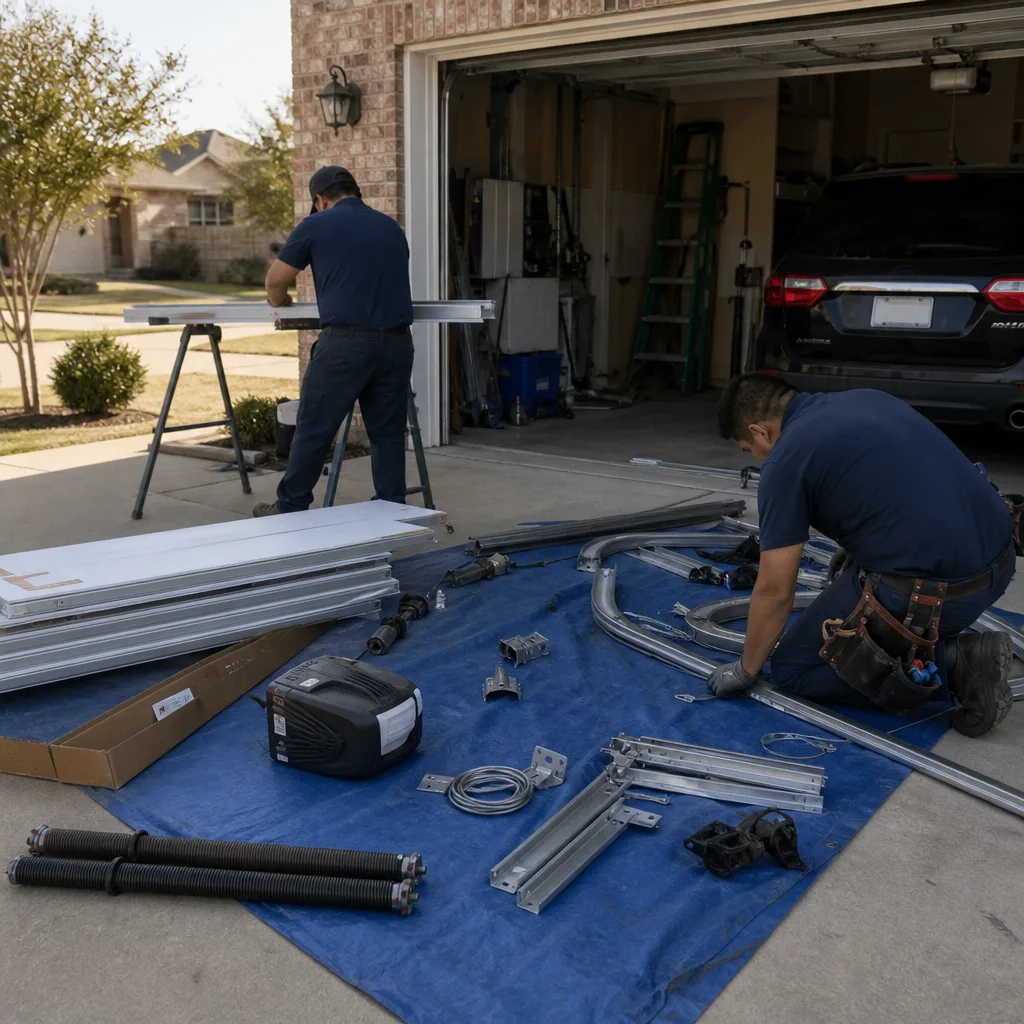
Garage door springs, cables, and openers involve stored tension and moving weight. A torsion spring under full tension holds enough force to cause serious injury or death if it releases uncontrolled. We don’t recommend DIY spring or cable work, period. For rollers that snap, tracks that bind, openers that chatter, or doors that won’t stay balanced, the diagnostic step is where we’d start. Servo Garage Doors Dallas offers free estimates in Dallas – call (469) 460-9039 and we’ll send a technician, inspect the system, and provide a written price and scope before any work begins. That’s the format: you see the documentation first.
Frequently Asked Questions
In Dallas, torsion spring replacement costs $180 to $340 per spring including labor in 2026, and both springs should be replaced together. The range depends on wire gauge, cycle rating, and whether the company itemizes or bundles the price. At the high end, a pair of 25,000-cycle springs on a heavy 16×7 door runs about $650 to $700 installed. At the low end, a standard 10,000-cycle pair on a lightweight door runs $350 to $400. If you’re quoted a single spring replacement, ask why both aren’t included. Call (469) 460-9039 for a written, itemized quote.
A Dallas service call fee should be $49 to $89 and should be credited toward the repair if you approve the work. It covers a full inspection: spring tension, cable condition, roller wear, track alignment, balance test, and safety sensor operation. If the fee is charged on top of the repair cost, you’re being double-billed. Ask before the technician arrives whether the fee is credited. This is the single most common pricing lever we see in Dallas quotes.
The answer depends on math, not opinion. Calculate the parts-to-door ratio: total repair parts cost divided by the cost of an equivalent new door. Under 0.4, repair. Over 0.6, replace. Between 0.4 and 0.6, weigh the door’s age. For most Dallas homes, a $500 repair on a 12-year-old door with a $1,800 replacement cost points to repair. A $900 repair on an 18-year-old door points to replacement. We also factor in hail damage claims, which can flip the math entirely. A dented door is often an insurance replacement, not a repair.
With a written-price-first company, no. The flat written price and written scope are delivered before work starts, and that’s the number on the invoice. This is Clause 1 of The Haven Standard. If a company quotes a verbal number and then revises upward on-site, walk away. You cannot compare a moving number, and you shouldn’t be asked to authorize a repair without a fixed cost.
This is a question every Dallas homeowner should ask before booking. Most component-level repairs – springs, cables, rollers, seals, sensors, and openers – should be completed same-visit because the parts are standard. For us, the answer is yes: our Dallas technicians carry a range of torsion springs, cables, rollers, seals, and openers on the truck. The reason this matters: if a company has to “order the part,” you’re paying for a second trip and usually waiting a week. Unless the door is non-standard, the parts exist and should be on the vehicle. Call (469) 460-9039 to confirm same-visit availability before you book.
A standard 16×7 steel garage door installed in Dallas costs $1,200 to $2,800 depending on insulation and finish. Wood composite doors run $2,500 to $4,500. Full aluminum with glass runs $3,000 to $6,000. These Dallas numbers include labor and basic haul-away. The range is explained by material, insulation R-value, and window or decorative options. A mid-market Amarr or Clopay door with R-12 insulation and a basic panel design should land around $1,900 to $2,400 installed. For a written, itemized quote on a new door, see our Garage Door Installation in Dallas page or call (469) 460-9039.
The Bottom Line
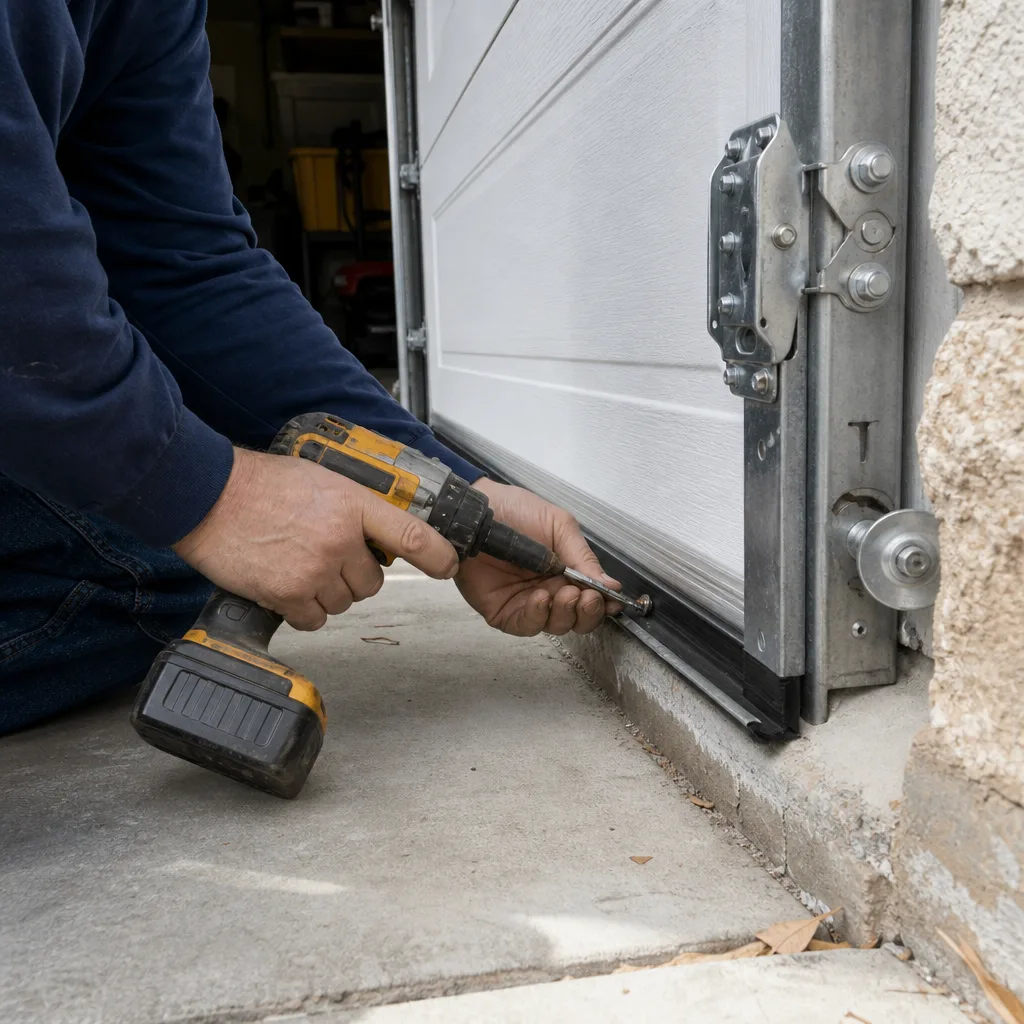
Dallas garage door pricing in 2026 is predictable at the component level and wildly variable at the quote level. The parts have market ranges: springs at $180 to $340 each, cables at $120 to $200 a pair, openers at $350 to $650 installed. The variance comes from what’s bundled, what’s itemized, and what’s hidden in line items like “tune-up” and “disposal.” A written, itemized scope makes any quote auditable. A single-line quote makes comparison impossible. Require the document. That’s not a preference; it’s the only thing that makes the market work. For a free estimate from Servo Garage Doors Dallas home, call (469) 460-9039 – a live person answers, a written price follows, and the photo record closes the visit.
Written by Marcus Deller, Owner at Servo Garage Doors Dallas, serving Dallas since 2015.