
Last updated September 20, 2026
Full 25-point door and opener safety check with every visit - springs, cables, rollers, tracks, and your LiftMaster or Chamberlain opener included
You get a price before we start. It does not change when the truck arrives.
 Before
 After
After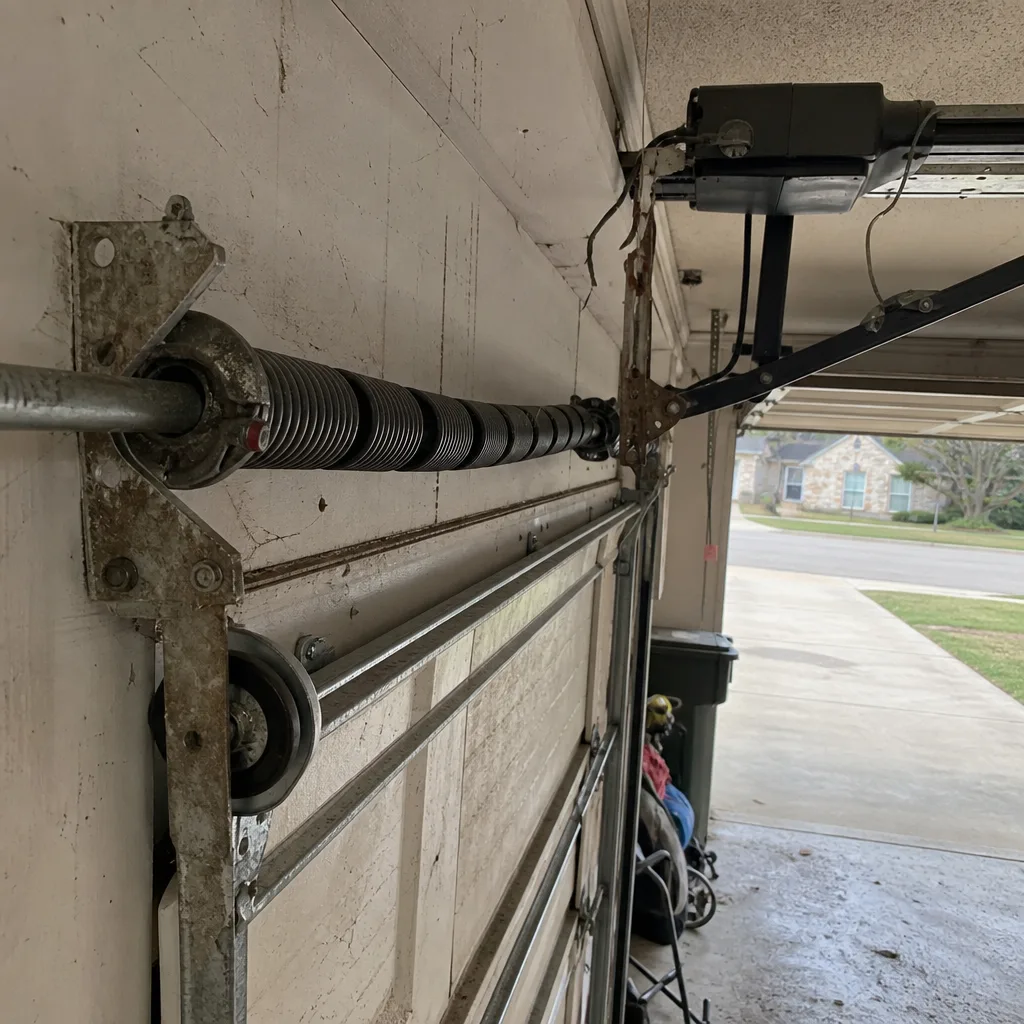 Before
 After
After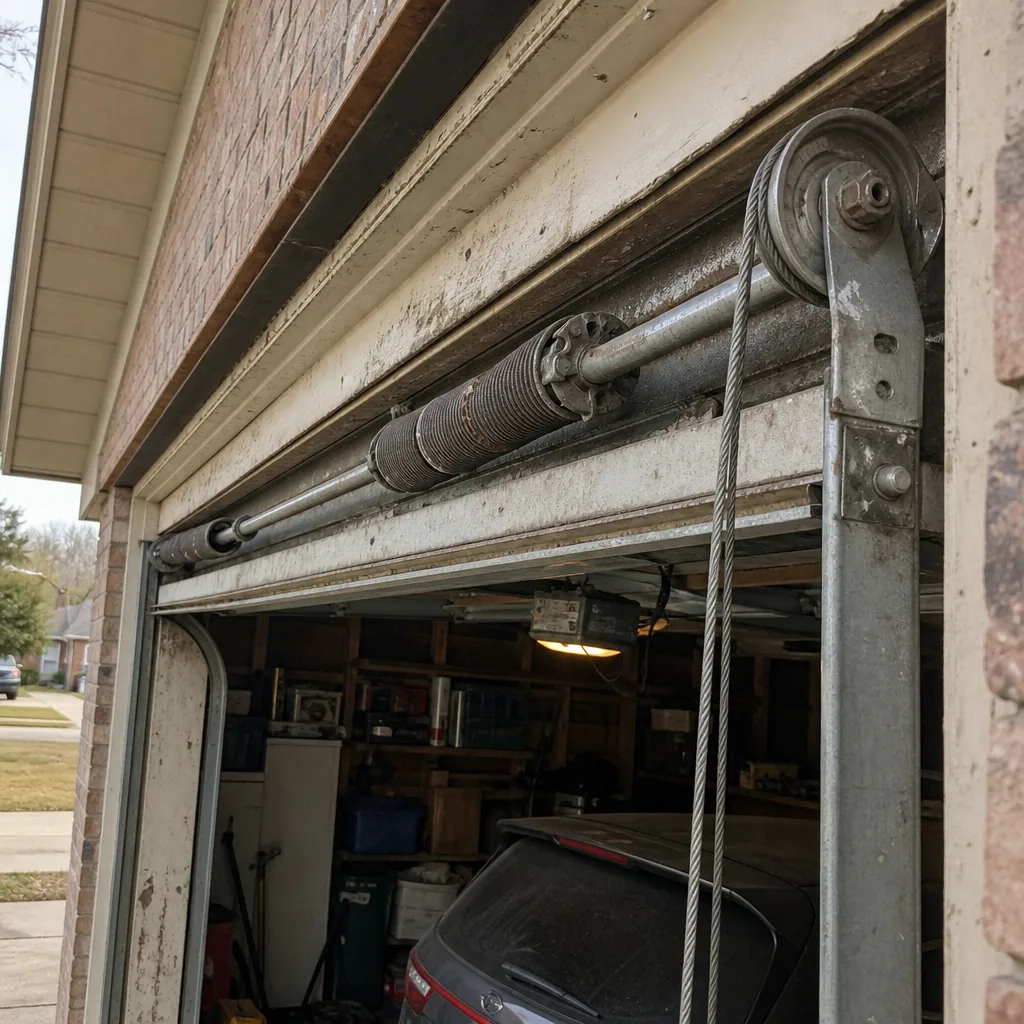 Before
 After
AfterSeasonal Garage Door Care for Dallas: Year-Round Homeowner’s Guide
Dallas doesn’t actually have four seasons. It has two hardware stress periods, summer heat that peels weatherseals off their adhesive and brief freeze events that crack anything stiffened by months of UV exposure, bracketed by two mild windows that are the only practical times for certain maintenance. A 48-hour ice storm is enough to split a bottom seal that survived five summers of 100-degree afternoons, and you won’t see the damage until the next heavy rain finds the gap. This guide maps the year around what Dallas weather actually does to garage doors, so you know exactly when to inspect, when to lubricate, when to replace, and when doing nothing is the smartest move. For The Complete Guide to Garage Door in Dallas and more guides & resources, see our blog.
We’ve repaired doors across Dallas since 2015, and the pattern is consistent: the homeowners who schedule maintenance in October and March pay less over the life of their door than the ones who wait for a failure. The timing isn’t arbitrary. It’s mechanical. Here’s the full year, built around how heat and freeze cycles affect steel, springs, seals, and electronics.
Quick Answer
Seasonal garage door maintenance in Dallas means two focused checkups per year: one in October or November before cold-temperature contraction changes spring and track clearances, and one in March or April before summer heat bakes seals and tests opener thermal limits. Between those windows, you only need to act after specific events, like a hail storm or a hard freeze, and the most important rule is to lubricate on schedule rather than reactively after you hear grinding.
Table of Contents
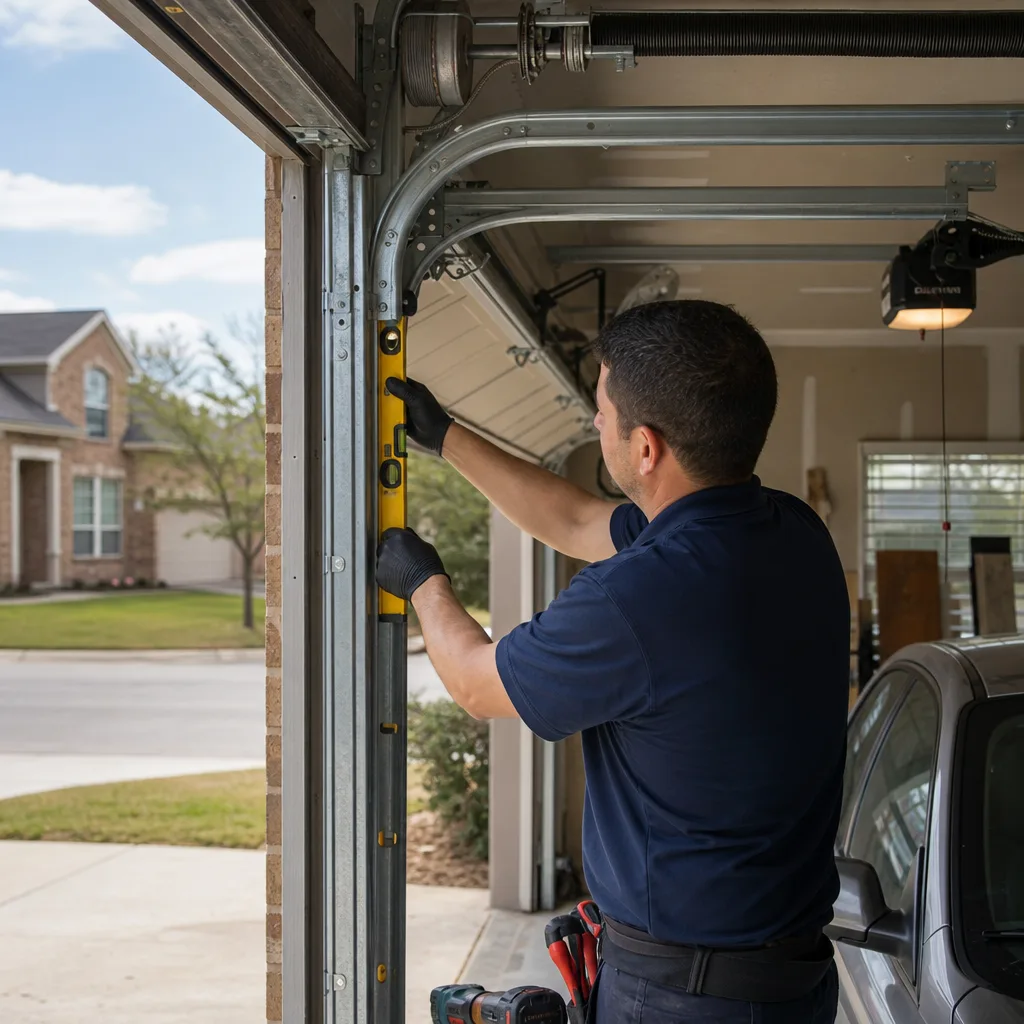
- Why Dallas Climate Is Harder on Garage Doors Than Homeowners Expect
- The October-November Window: Pre-Contraction Lubrication and Adjustment
- Winter Freeze Response: What to Do (and Not Do) When a Door Freezes to the Floor
- The March-April Checkup: Seals, UV Damage, and Thermal Limits
- Post-Hail Protocol: The 72-Hour Inspection Window
- Why Spring and Fall Are the Right Windows for New Door Installation in Dallas
- Month-by-Month Maintenance Schedule
- Common Mistakes to Avoid
- When to Call a Professional
- Frequently Asked Questions
- The Bottom Line
BeforeAfterWhy Dallas Climate Is Harder on Garage Doors Than Homeowners Expect
Dallas sits in a climate zone that combines high summer heat with periodic hard freezes, and that combination is worse for a garage door than either condition alone. Steel expands when it’s hot and contracts when it’s cold. A standard 16-foot steel door will measurably change dimension between a 105-degree August afternoon and a 15-degree February morning. The change is small in absolute terms, a few millimeters at most, but it’s enough to shift how the door sits in the tracks, how the bottom seal meets the concrete, and how much tension the springs carry.
The bigger problem is the rubber. Weatherseals, bottom seals, and vinyl trim all degrade through oxidation. Heat accelerates that oxidation. After five or six Dallas summers, the bottom seal loses its flexibility and starts to hold a compressed shape. When a freeze event arrives, that stiffened rubber can’t flex to absorb the contraction, so it cracks instead. The crack isn’t dramatic, but it’s a direct path for rain, insects, and conditioned air loss. In neighborhoods like East Dallas, Lake Highlands, and Preston Hollow, where garages are often attached and share a wall with living space, a split bottom seal quietly raises cooling bills through the entire summer before anyone notices the gap.
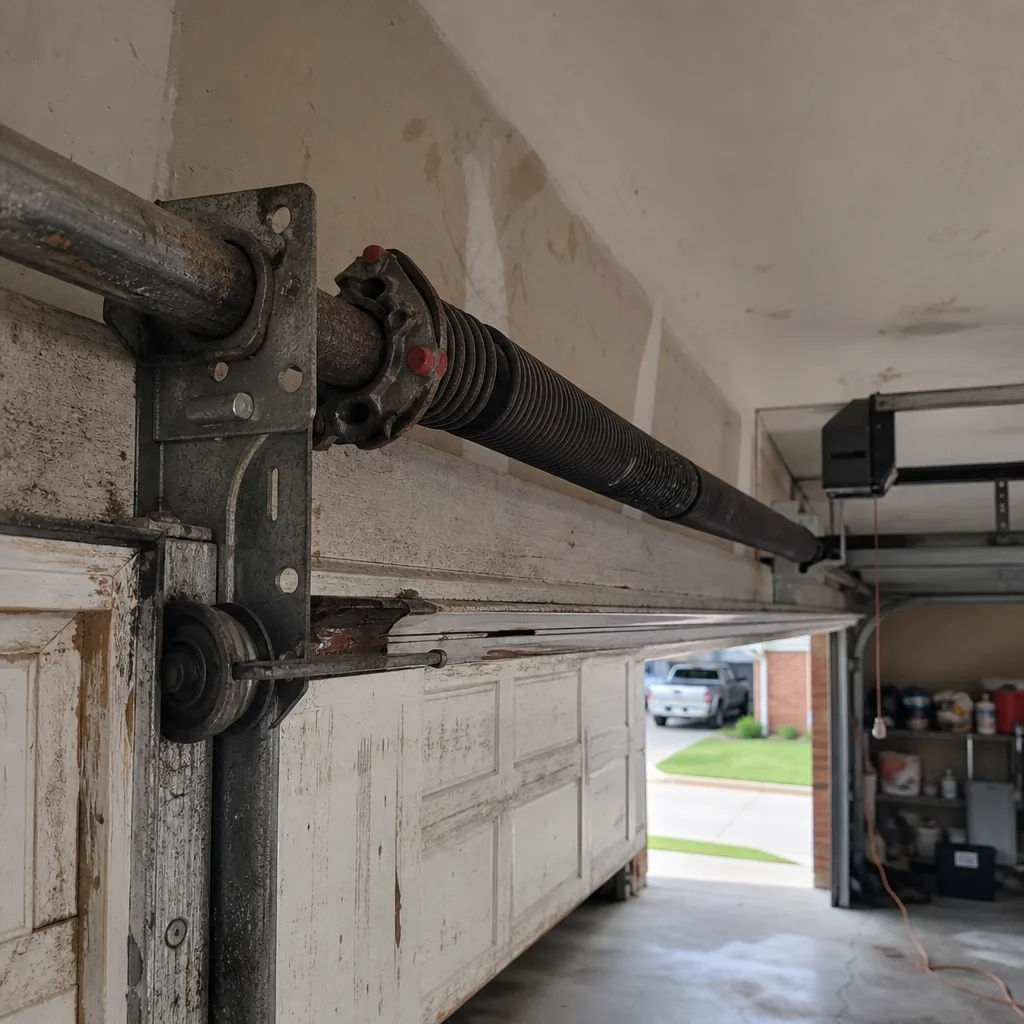
Springs face a related stress cycle. Torsion springs, the tightly wound coils mounted above the door opening, lose a small fraction of their cycle life every time they flex. Temperature swings don’t directly break springs, but cold metal loses ductility. A spring that’s already nearing the end of its rated cycle life is more likely to snap on a 20-degree morning than a 70-degree afternoon, simply because the metal is less forgiving when it’s cold. We measure springs by wire diameter and coil count rather than guessing at remaining life, because those numbers tell you exactly where the spring sits in its expected cycle range.
The October-November Window: Pre-Contraction Lubrication and Adjustment
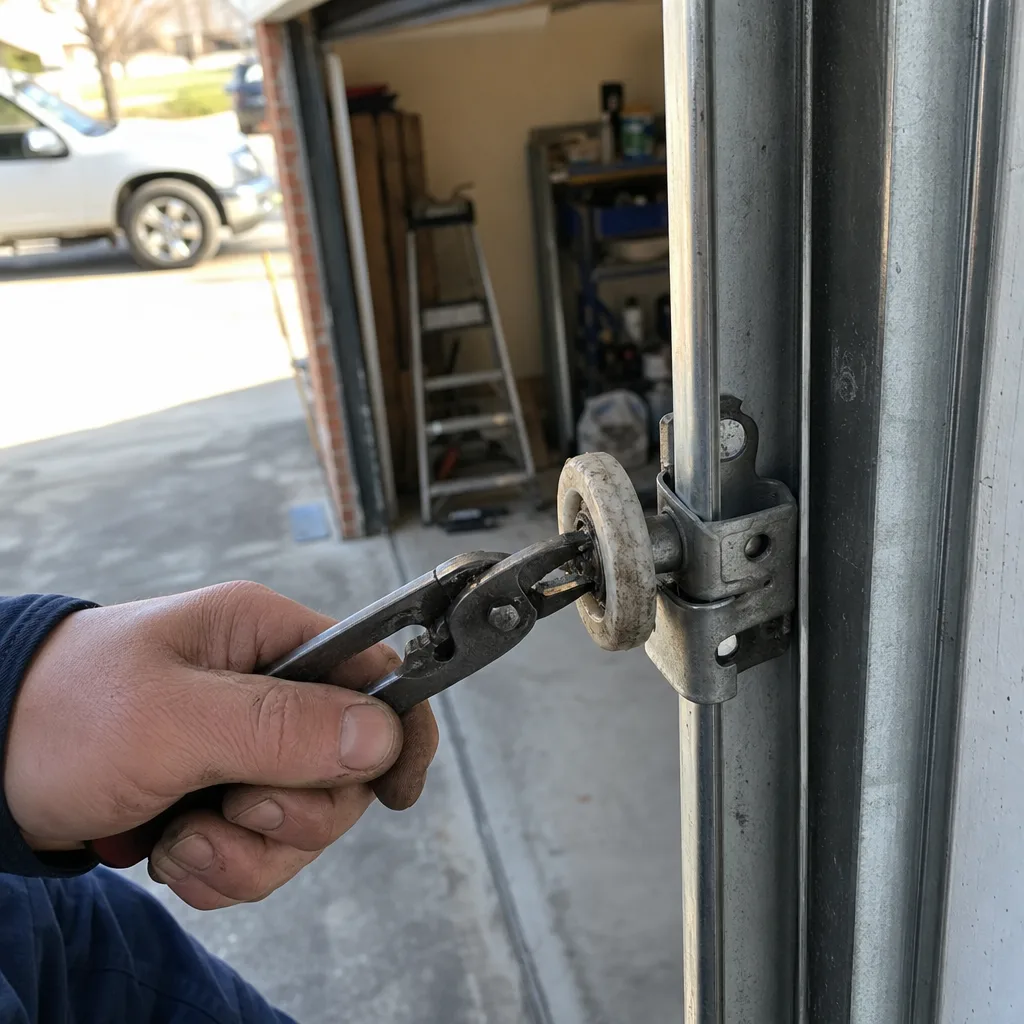
October and early November are the most important maintenance months for a Dallas garage door, and the reason is mechanical rather than seasonal tradition. Cold weather contracts metal and stiffens lubricant. If you lubricate bearings, hinges, and springs before the first hard cold snap, the lubricant distributes while the metal is still at moderate temperatures and the door is running at normal clearances. If you wait until January, you’re working with contracted hardware, thickened lubricant, and clearances that are already slightly off. The maintenance itself doesn’t get harder, but it’s less effective at actually protecting the moving parts.
The October-November checklist should include:
- Lubricate torsion springs along the coil faces. Use a spray lubricant designed for garage door hardware, not WD-40. WD-40 is a solvent that strips existing lubricant; a lithium-based or silicone-based product actually coats and protects.
- Lubricate hinge pins and roller bearings. Nylon rollers with sealed bearings don’t need lube on the wheel itself, but the hinge pin where the roller stem rides does.
- Check the bottom seal for compression set. Run your hand along the seal at the center and at both corners. If it’s flattened, cracked, or no longer presses evenly against the concrete, replace it before wet weather arrives.
- Test the balance. Disconnect the opener with the emergency release and lift the door manually to waist height. A properly balanced door stays where you leave it. If it falls or rises on its own, the springs are worn and need adjustment or replacement.
- Inspect track bolts and mounting brackets. Cold weather doesn’t loosen bolts, but the contraction cycle can expose bolts that were already marginal. A 15-minute bolt check in October is cheaper than a track repair in February.
This is also the window for one specific task that Dallas homeowners often skip: checking the opener’s force settings. Openers made after 1993 use a force-adjustment system that monitors how hard the motor works to lift the door. When the door gets heavier, the opener compensates by increasing force. If the door gets heavier because of worn springs or cold-thickened lubricant, the opener masks the problem until something fails. Dialing the force settings back to manufacturer spec in October, after lubrication, resets the baseline so the opener isn’t silently working against itself all winter.
Winter Freeze Response: What to Do (and Not Do) When a Door Freezes to the Floor
Dallas gets ice storms often enough that a frozen garage door is a regular January problem, and the wrong response to it destroys springs and voids warranties. Here’s the sequence, and it matters more than most homeowners realize.
When a door freezes to the concrete, it’s almost always the bottom seal that’s stuck. Water seeps under the seal during the day, the temperature drops overnight, and the rubber bonds to the ice. The door won’t open because the opener is trying to lift the slab through the seal. The most common response, hitting the opener button repeatedly, compounds the problem. Every cycle pulls tension on the springs while the door is anchored at the bottom. Do that enough times and you’ll snap a torsion spring, which is the single most dangerous component on a garage door system.
What to do instead:
- Do not use the opener to force the door. Disconnect the emergency release cord and leave the door in manual mode until it’s free.
- Apply heat to the seal, not the door. A hair dryer or heat gun on low, directed at the bottom seal where it meets the concrete, will melt the ice bond without heating the door panel enough to warp it.
- Use a plastic scraper or wooden wedge, never a metal shovel, to break remaining ice. Metal against the bottom seal tears the rubber. A torn seal needs replacement, and the gap will refreeze on the next cold night.
- Once the door is free, wipe the bottom edge dry and powder the seal lightly with silicone spray. Silicone repels water and reduces the chance of refreezing.
What not to do:
- Do not pour hot water on the track. The thermal shock can crack the seal and cause condensation that refreezes worse within an hour.
- Do not use rock salt or ice melt directly on the seal. Chloride-based deicers accelerate rubber degradation and can cause the seal to crack prematurely. If you need to treat the concrete, keep deicer at least six inches from the seal.
- Do not attempt to manually muscle the door open with the opener still connected. If the emergency release is still engaged, forcing the door can strip the trolley carriage gears and damage the opener rail.
- Do not ignore the freeze as a one-off event. A door that freezes repeatedly is telling you the bottom seal is no longer making even contact. The concrete may have settled, or the seal may be worn. Either way, the fix is mechanical, not seasonal.
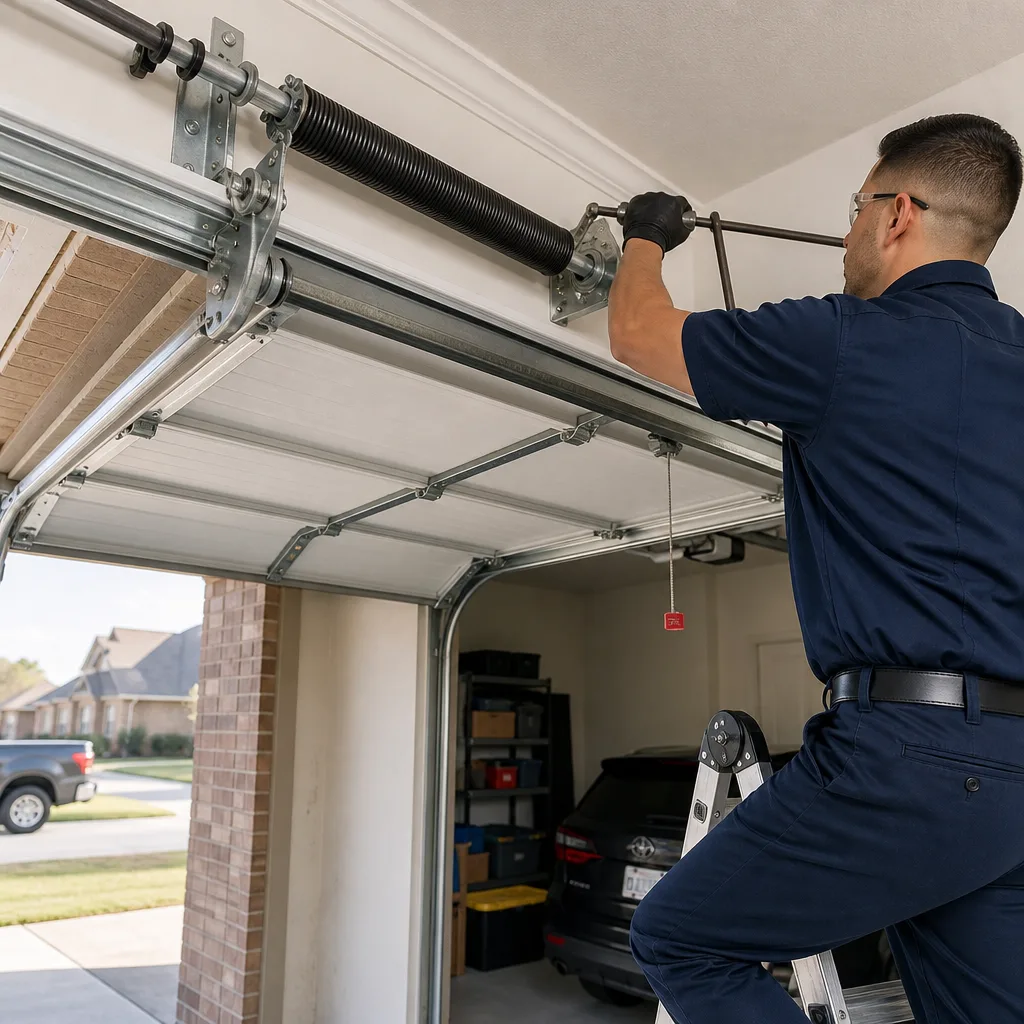
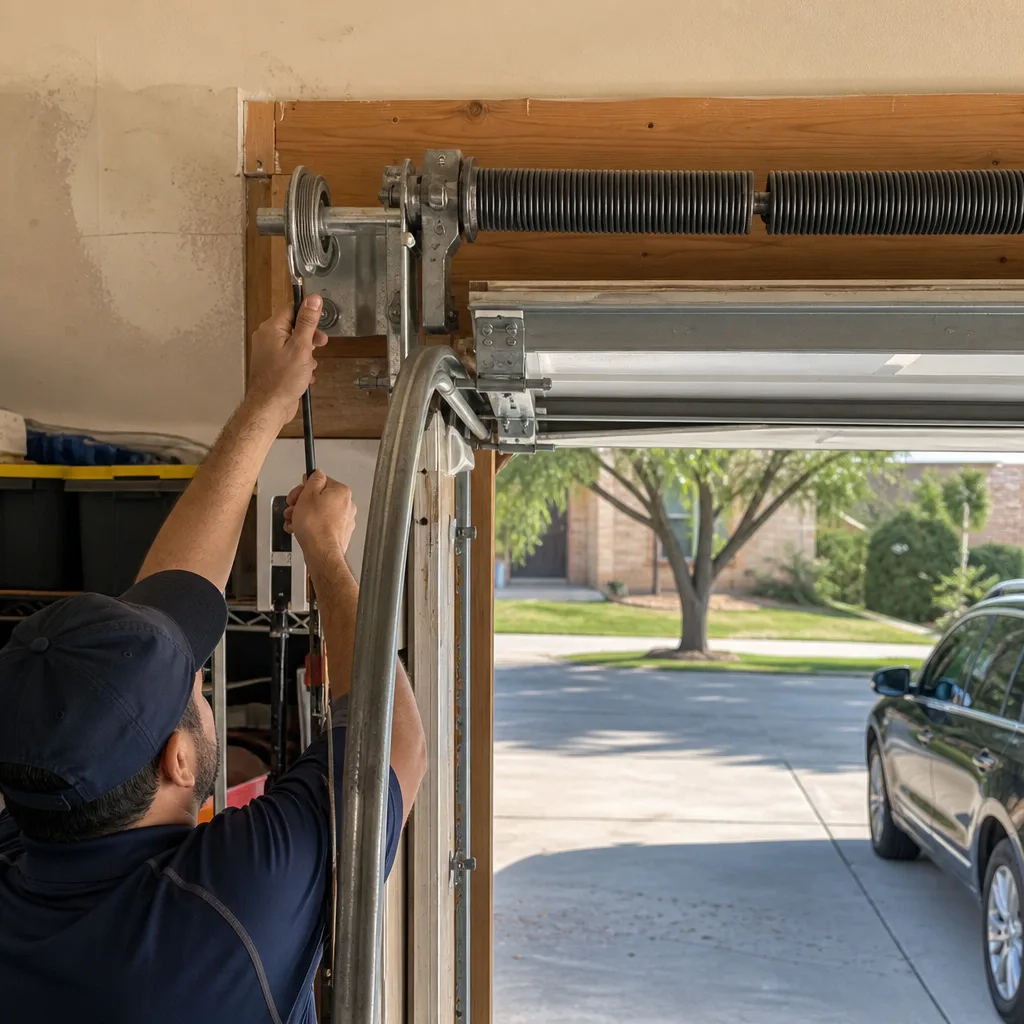
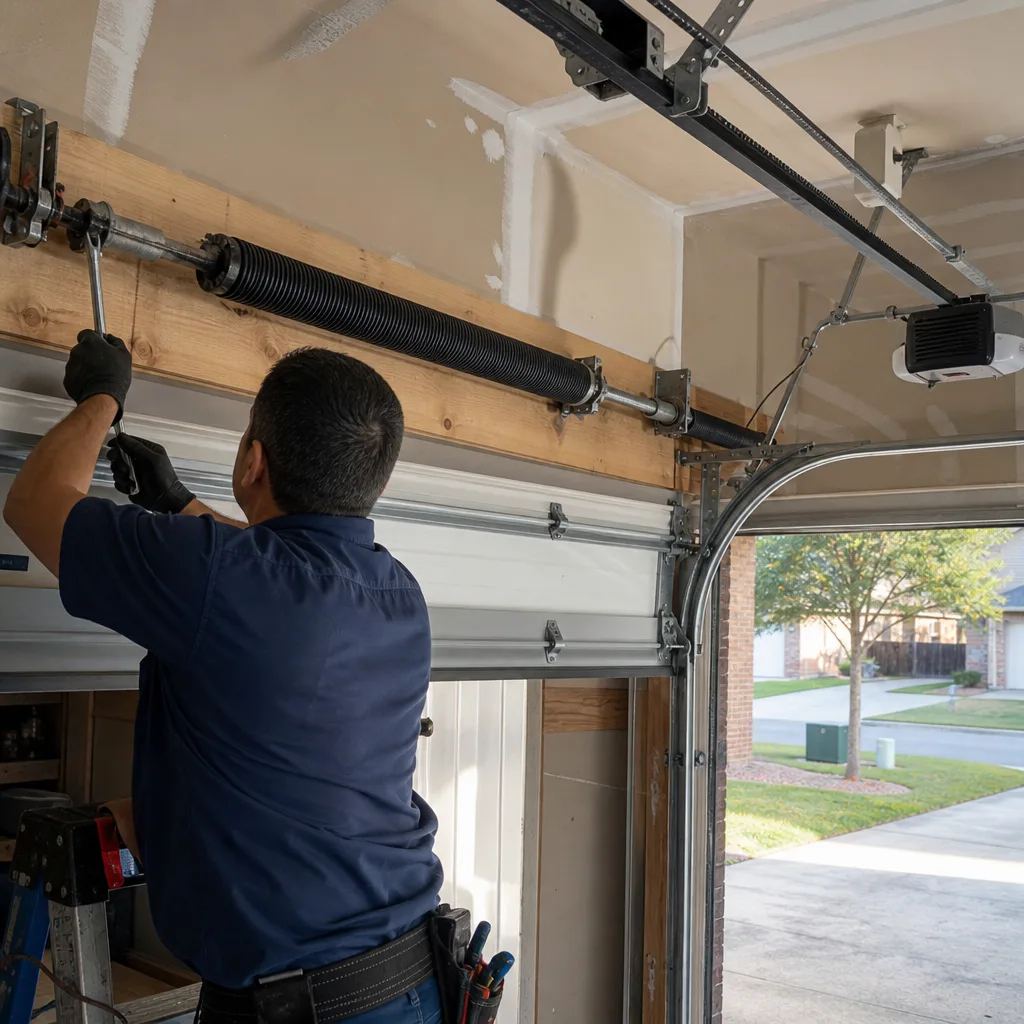
One more thing worth saying plainly: torsion springs carry enough tension to cause serious injury if they fail while someone is working underneath them. Any spring work, including inspection after a freeze event, should only be done by someone who understands the tension levels involved. We photograph every failed component before replacing it, and that photo record is part of why our garage door repair in Dallas service has the documentation trail it does.
The March-April Checkup: Seals, UV Damage, and Thermal Limits
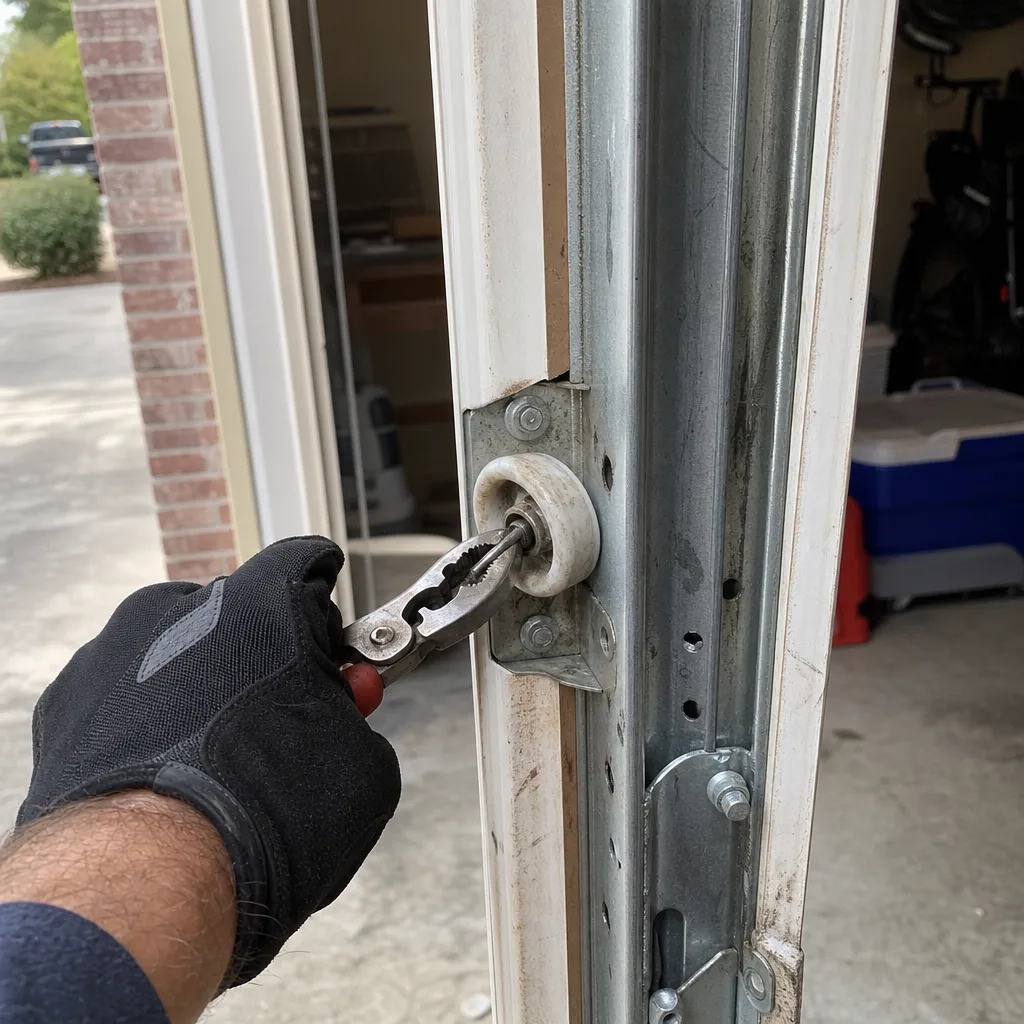
March and April are the second maintenance window, and this one is about preparing for heat. Dallas summers are unforgiving to rubber and electronics, and the failures happen in predictable ways. A garage door that faces west or south in neighborhoods like Oak Cliff, Richardson, or Garland gets direct afternoon sun. Panel temperatures on a dark-colored door can exceed 160 degrees on an August afternoon. That heat bakes the top weatherseal, the jamb seals along the sides, and the bottom seal. If the seals were already marginal after winter, summer finishes them off.
The March-April checklist:
- UV inspection on all seals. Run your fingers along the top weatherseal and the side jamb seals. Cracking, brittleness, or visible light gaps mean replacement is due. UV-damaged rubber doesn’t recover; replacement is the only fix.
- Bottom seal compression test. Close the door and check where the bottom seal meets the concrete, especially at the outside corners. If you can see daylight under either corner, the seal is either worn or the concrete has settled. A compression test, pressing down on the center of the closed door to see how much the seal flexes, tells you whether you’re dealing with worn rubber or an uneven floor.
- Opener thermal limit reset. Motor heat is the primary killer of garage door openers in Dallas. When the attic or garage gets hot, the opener’s thermal overload circuit trips more easily. If the opener stops mid-cycle on hot afternoons but works fine in the morning, check the motor housing temperature and reset the thermal overload if the opener has one. Belt-drive openers from LiftMaster and Chamberlain tend to run cooler than chain-drive models, which matters more in Dallas than it does in Ohio.
- Panel inspection for delamination. Insulated steel doors use a steel skin bonded to an insulation core. Heat cycling eventually breaks that bond, especially on doors older than ten years. Look for panels that feel spongy when pressed or visible separation at the panel edges.
- Track alignment check. Heat expansion pushes tracks outward, and bolted connections that were tight in March can shift by August. A door that runs unevenly or makes side-to-side contact in the tracks is often a track alignment issue, not a spring problem.
This spring checkup is also when we recommend testing the auto-reverse sensors. Sensor alignment drifts with temperature swings, and a misaligned sensor usually shows up as a door that refuses to close or reverses for no visible reason. The fix is usually a few minutes with a screwdriver, but the diagnosis matters: a sensor that trips repeatedly is different from a force-setting problem, and treating the wrong one wastes time and parts.
Post-Hail Protocol: The 72-Hour Inspection Window
When a hailstorm hits Dallas, most homeowners think about roofs, siding, and cars. Garage doors are often an afterthought, which is a mistake. Hail damage to a steel garage door doesn’t just change how it looks. The dents change how the panel interacts with the track and braces, and the damage telegraphs over time. A dent in the center of a panel doesn’t move the track, but a dent near the panel edge, where the panel bolts to the hinges and rollers, changes the angle of the roller in the track. Over the following months, that slight angle change wears the track unevenly, and the door starts to bind or run noisy. By the time the binding is obvious, the track has already been damaged by the roller.
The window that matters is the first 72 hours after the hail event. During that period, the dents have not yet had time to telegraph into track or hinge wear, and an assessment is genuinely diagnostic rather than already a repair. After 72 hours, the door has cycled enough times that the wear process is underway.
Post-hail inspection steps:
- Photograph every panel in direct light. Hail dents show more clearly in raking light, early morning or late afternoon when the sun is low. Document the dents with close-up and full-door photos.
- Check the panel edges and hinge mounting points specifically. Dents within two inches of a hinge or roller bracket are structurally different from dents in the field of the panel. They affect alignment, not just appearance.
- Run the door through two full cycles and listen. New scraping, clicking, or thumping that wasn’t there before the storm indicates the door is already out of alignment. Stop cycling and schedule an inspection rather than continuing to run the door.
- Check the top section for telltale cracks. The top panel takes the most direct hit in a hail storm because it’s at the highest angle. Hairline cracks in the steel skin, especially around the top strut, are a structural concern even if the panel looks cosmetic.
If you have insurance coverage for hail damage, the photo record matters. We provide a documented photo record on every visit, including after hailstorms, specifically because the insurance adjuster needs evidence of what was damaged and when. A door that was already dented before the storm looks identical to one that was dented by the storm unless you have pre-storm documentation. Most Dallas homeowners don’t, and that’s part of why we photograph every door we service as a baseline. An installation in Dallas also includes the post-work photo record, so you have documentation from day one.
Why Spring and Fall Are the Right Windows for New Door Installation in Dallas
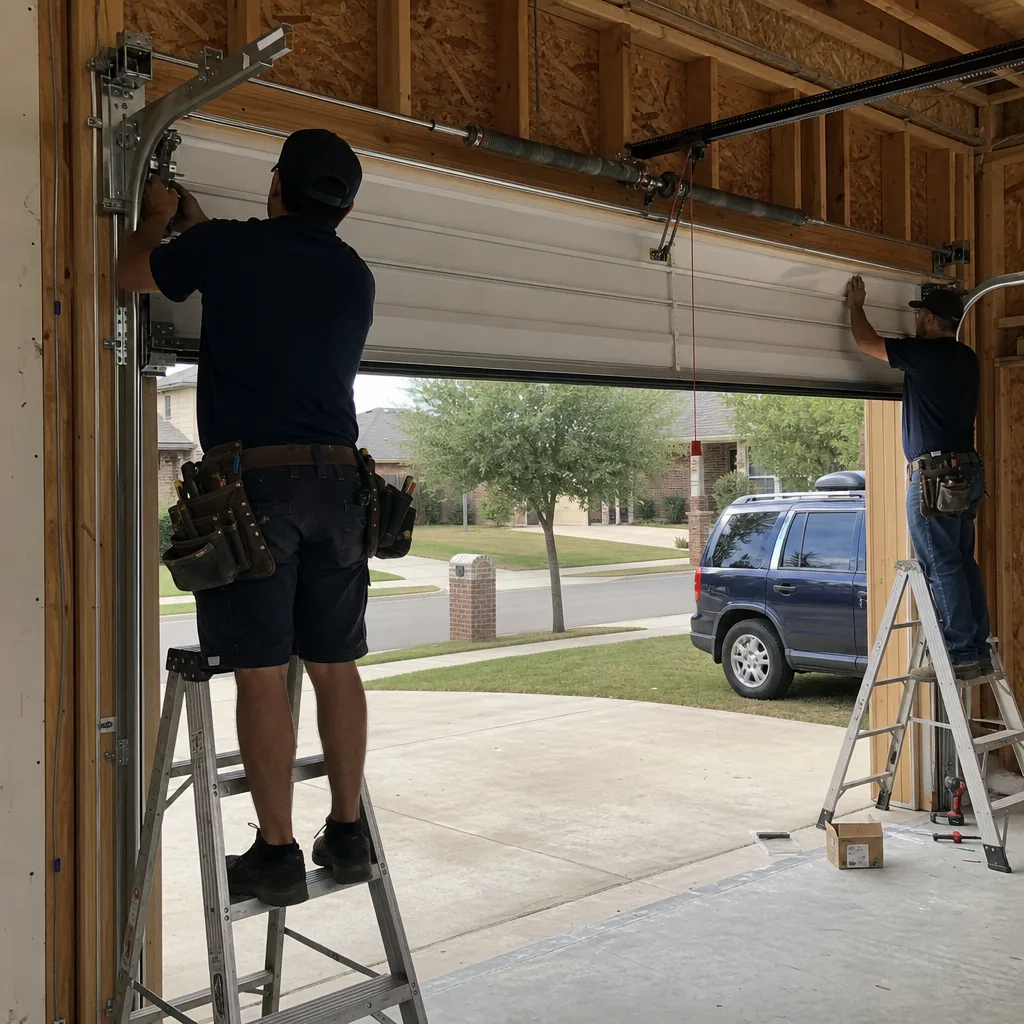
If you’re planning to replace a garage door, the timing should be driven by how installation works, not by when the old door fails. Check our Garage Door Cost Breakdown: The Dallas Homeowner’s Reference for 2026 to budget for your project. New door installation in Dallas works best in spring and fall, and the reason is practical: moderate temperatures let the installer take accurate measurements without fighting thermal expansion, and they let the steel flex through its natural expansion range before the first extreme season hits.
A door installed in August goes in at the maximum expanded dimension. When winter arrives, the door contracts, and the clearances the installer set in the heat are now slightly wide. A door installed in January goes in at maximum contraction. When summer arrives, the door expands, and the clearances are now slightly tight. Neither scenario is automatically a failure, but both require re-adjustment that installation at a moderate temperature avoids. Installers in Dallas have always worked around this, but the best results come from doors installed when the ambient temperature is between about 60 and 85 degrees, which for Dallas means March through May and September through November.
Practical planning: if you want an installation in the spring window, start getting written quotes in late January or February. Lead times on custom-sized doors, especially from manufacturers like Amarr or Wayne Dalton, run four to eight weeks. If you wait until April to start shopping, you’re likely looking at a June or July install, which puts the door in during peak heat. Most homeowners don’t plan six weeks ahead for a garage door replacement because the old door usually fails without warning. But if you know your door is nearing the end of its life, say it’s 15 years old with a balance problem and rust at the panel seams, the smart move is to start the replacement process before the failure, not after.
Fall installation has one advantage: the door goes in before the first freeze, and the seals are fresh for the wet season. A new bottom seal in October is at maximum effectiveness for the entire winter and spring. The same seal installed in May faces its first Texas summer immediately, which shortens its overall life. Not by a dramatic amount, but enough that fall installation slightly favors seal longevity.
Month-by-Month Maintenance Schedule
This is the full year in sequence. Print it, tape it inside the garage cabinet, and let it do the remembering for you.
January: After any freeze event, check that the door wasn’t forced open. If you had to break an ice bond, inspect the bottom seal for tears and reapply silicone spray. Test the opener force settings after the cold snap passes.
February: Check track bolts while the metal is still contracted. Tighten anything loose. Check the balance again if the door behaved oddly during any January freeze.
March: Full pre-summer inspection. Seals, balance, opener thermal settings, track alignment. This is the second major maintenance month.
April: Schedule any seal replacements identified in March. Test auto-reverse sensors. If you’re planning a door replacement, this is the tail end of the spring install window.
May: Before the heat peaks, run the door through five full cycles and listen. Any new noise gets diagnosed now, before summer loads exacerbate it.
June: If your garage is not climate-controlled and you store heat-sensitive items, this is the month to check interior garage temperature in the afternoon. It won’t change the door, but it will tell you whether your door’s insulation is doing its job.
July: Mid-summer cycle check. Openers that run hot may begin tripping thermal limits now. If the opener is erratic on hot afternoons, the thermal circuit needs attention.
August: Peak heat. Minimal hands-on maintenance, but photograph the door if a hail storm hits. Those photos are your baseline.
September: Start thinking about the October-November maintenance window. Order any parts you know you need, like replacement seals or new hinge assemblies, so they’re on hand when the weather cools.
October: First major maintenance month. Full lubrication, seal replacement, balance test, opener force reset, track tightening. If you only do maintenance twice a year, this is the one that matters most.
November: Finish any remaining pre-winter tasks. Replace the bottom seal if it was marginal in October. Confirm the emergency release works smoothly in case of a freeze event.
December: After the first hard cold snap, check the bottom seal for compression set. If the door has not yet frozen to the floor but the seal looks stiff, replace it before the next ice storm.
Common Mistakes to Avoid
- Lubricating with WD-40. WD-40 is a water displacer and solvent, not a lubricant. It strips existing lubrication and leaves metal dry, which accelerates wear on hinges and bearing points. Use a garage-door-specific lithium or silicone spray.
- Using the opener to break a frozen door free. Repeated opener cycles while the door is frozen to the floor put peak tension on the torsion springs. One spring can snap on a single forced cycle. Always release the emergency cord before dealing with a frozen seal.
- Ignoring a slow drift in door balance. A door that started out balanced and now sags at one corner is telling you something mechanical has changed. Waiting until it fails turns a spring adjustment into a spring replacement, and a spring replacement costs more.
- Scheduling a door replacement in July without a failure. Installation during peak Dallas heat means the door is set at maximum thermal expansion. The same door installed in April or October will need fewer adjustments in its first year.
- Skipping the photo record after hail. Without a documented before-and-after, you can’t show an insurance adjuster which dents are new. The 72-hour window is about evidence, not just repair.
- Treating all opener problems as sensor misalignment. A door that reverses near the floor may have sensor issues, but it may also have a force-setting problem, a track obstruction, or a worn gear. Diagnosing by guesswork replaces parts that don’t need replacing.
- Waiting until you hear grinding to inspect. Grinding is the sound of mechanical failure already in progress. The inspection windows in October and March exist specifically to catch wear before it becomes noise.
When to Call a Professional
Some maintenance tasks are genuinely DIY: lubricating hinges, checking the balance, photographing hail damage. Others are not. See our DIY vs Professional Garage Door: The Dallas Homeowner’s Decision Guide to know which tasks to handle yourself. If the torsion spring shows visible separation between coils, call a professional before running the door again. If the door has come off its tracks, do not attempt to reseat it while the springs are under tension. If the opener trips thermal limits repeatedly after you’ve reset it once, the problem is internal to the opener, not environmental. And if the door has frozen to the floor and you’ve already tried to force it open once with the opener, inspect the springs before cycling again.
Servo Garage Doors Dallas offers free estimates in Dallas. Call (469) 460-9039 and a real person answers, not a recording. We’ll give you a documented photo record of what we find, and a written price before any work starts.
Frequently Asked Questions
Twice a year is the correct schedule: once in October or November before cold contraction changes clearances, and once in March or April before summer heat thickens everything. More frequent lubrication in Dallas’s climate doesn’t add protection and just accumulates grime on the moving parts. Call (469) 460-9039 if you want a professional to handle the full maintenance checklist, including a documented condition report.
Seasonal maintenance service in Dallas typically runs $85 to $160 per visit when performed by a professional, including lubrication, balance testing, seal inspection, and a basic tune-up. Replacing a bottom seal adds $65 to $120 depending on door width. Servo Garage Doors Dallas quotes a flat, written price before any work starts, per Clause 1 of The Haven Standard, so the number you approve is the number you pay.
Yes, and it happens every winter. The bottom seal bonds to ice on the concrete, and the door won’t lift until the bond is broken. The correct response is to release the emergency cord and apply gentle heat to the seal, never to force the opener, which can snap a torsion spring and void spring warranties. If it happens repeatedly, the seal needs replacement or the concrete has settled and needs leveling.
Indirectly, yes. Springs fail primarily from cycle fatigue, the accumulated number of open-and-close operations, but heat accelerates the oxidation of the spring surface and reduces the metal’s fatigue life. A spring in an uninsulated Dallas garage that faces afternoon sun will not last as long as an identical spring in a shaded, climate-controlled garage. We measure springs by wire diameter and coil count to assess where a spring sits in its expected cycle life.
Fall, specifically October through November, is the best window. The door goes in at moderate temperature before the first freeze, the new seals get their entire first wet season at maximum effectiveness, and the installation avoids the thermal expansion extremes of summer. Spring is the second-best window. Start getting written quotes about six weeks ahead of your target install date.
Not with Servo Garage Doors Dallas. We deliver a flat, written price and written scope before any work begins, and that price does not change after inspection. If the scope changes, you approve a new written price first. This is a Clause 1 requirement of The Haven Standard. Call (469) 460-9039 for a free estimate with no call-for-quote games.
The Bottom Line
Dallas garage doors fail in patterns, not randomly. The heat destroys rubber and stresses electronics. The freezes crack stiffened seals and push marginal springs past their limits. The mild months between the extremes are when maintenance works best, not because the weather is pleasant but because the hardware is at its most cooperative. October and March are your maintenance months. The 72-hour hail window is your insurance evidence window. And the six-week lead time on a new door quote is the difference between an April install and a July one. Keep a photo record, use the right lubricant, and don’t force a frozen door. Everything else follows.
If you have questions about your specific door, call (469) 460-9039 for a free estimate. We’ll inspect, document, and give you a written price before any work starts. That’s Servo Garage Doors Dallas, serving Dallas since 2015, with every job handled under The Haven Standard. For services including garage door opener repair and installation in Dallas, we’re the team that shows you the failed part before quoting a replacement.
Written by Marcus Deller, Owner at Servo Garage Doors Dallas, serving Dallas since 2015.